All of Egon Schiele’s works in Vienna, Tulln and Neulengbach
Egon Schiele, alongside Gustav Klimt, ranks among Vienna’s most distinctive artists. Born in the charming town of Tulln an der Donau, he came to study at the Vienna Academy of Fine Arts at the age of 16 and died in Vienna just 12 years later from Spanish flu.
Schiele developed a unique, instantly recognisable style at a relatively early age, one that captivates, provokes and unsettles the viewer. He was a master of line, and Schiele’s drawings are not sketches but finished works, which is why he signed each one. He was a master of line, and Schiele’s drawings were not mere sketches but finished works, which is why he signed each one. Of the approximately three thousand graphic works, only a few are on display in museums, as the paper is too sensitive to light and humidity, and even the most modern museum cannot afford to exhibit watercolours, gouaches and drawings on a permanent basis. Schiele’s legacy of paintings, however, is ten times smaller, and the vast majority of it is concentrated in Vienna. This guide to all the museum collections and memorial sites is designed to help you find the Schiele you are looking for.
All Schiele collections in Vienna’s museums
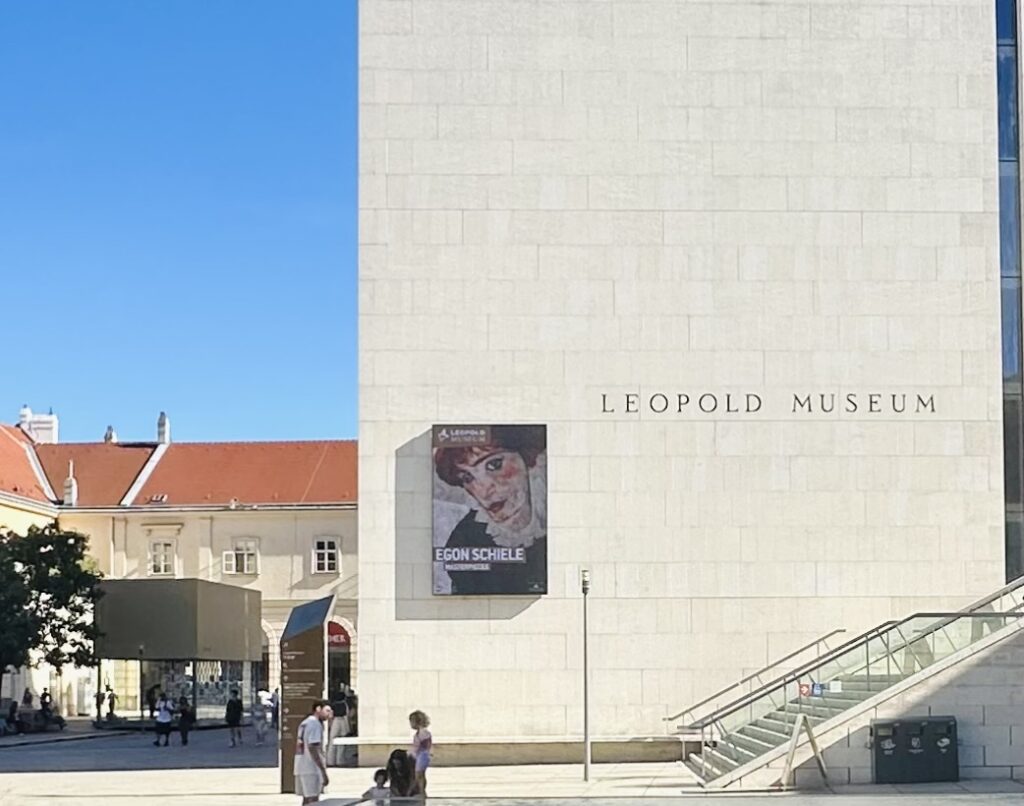
Leopold Museum
The Leopold Museum houses the largest collection of Egon Schiele’s works in the world. It is also the only place where you will always find several dozen works by this distinctive Expressionist, both on canvas and on paper. They are located on the third floor. The four Schiele galleries, forming part of the museum’s permanent ‘Vienna 1900’ section, follow on from the galleries dedicated to Oskar Kokoschka and Richard Gerstl, so if you’re not in a hurry, you’ll have the chance to compare Schiele with his equally expressionist contemporaries.
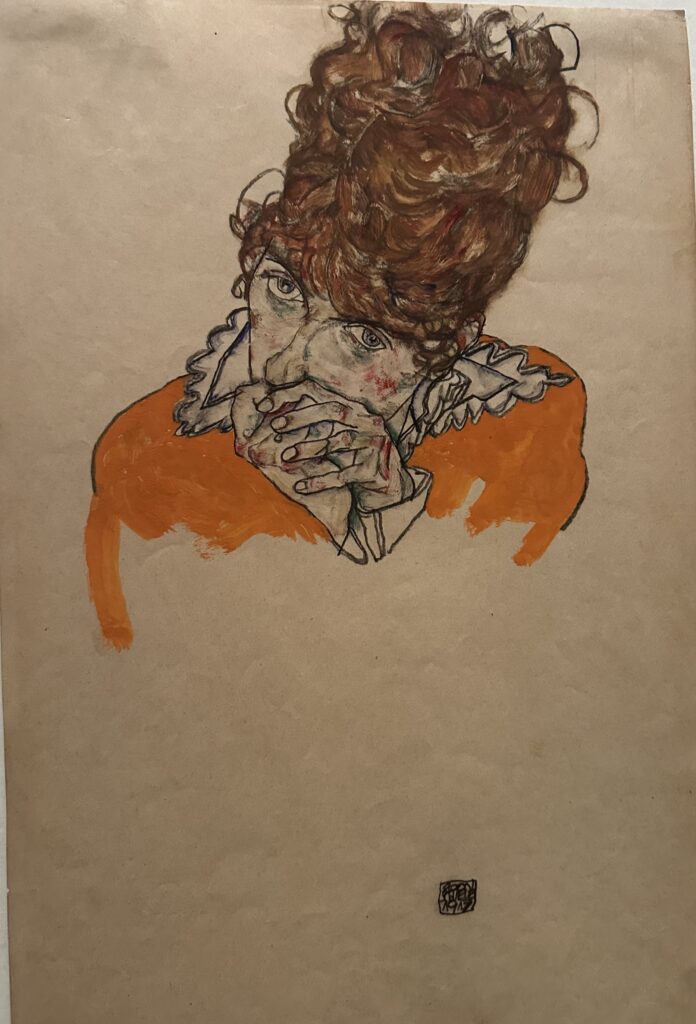
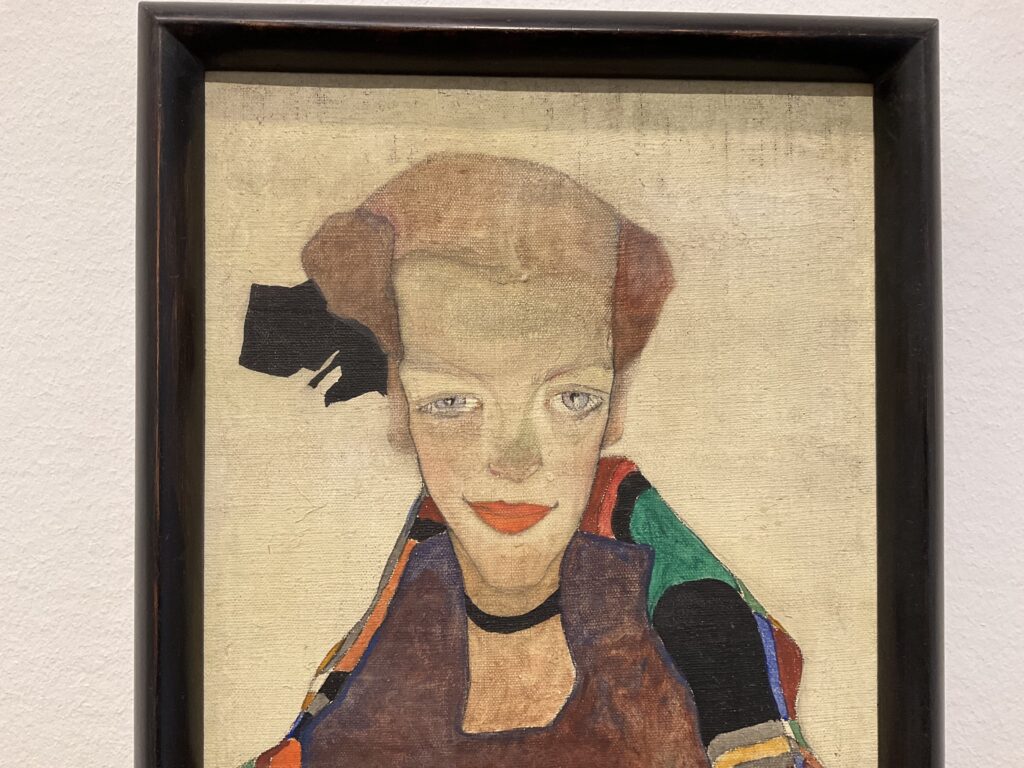
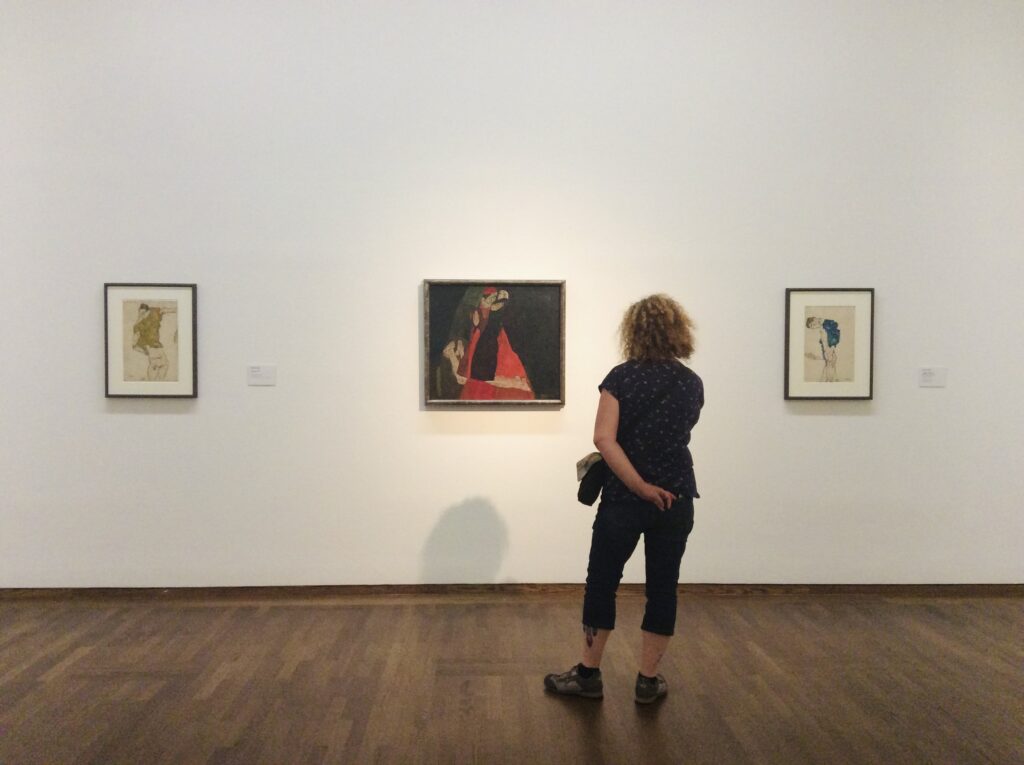
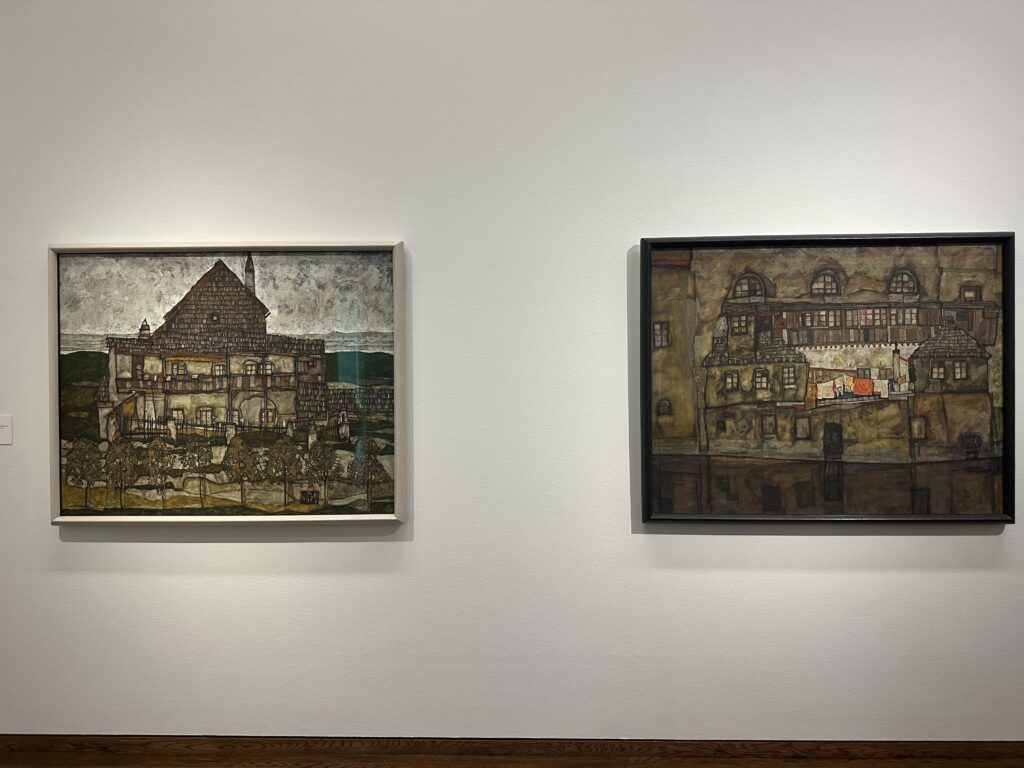
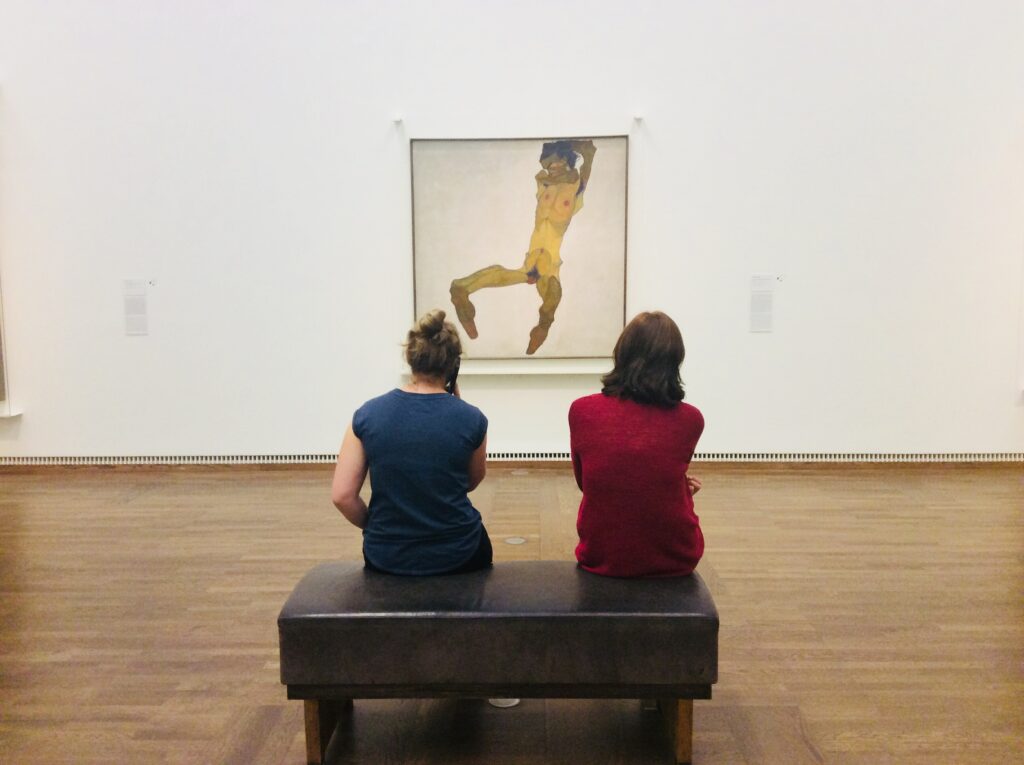
The exhibition is arranged according to a chronological-and-genre principle, beginning with Schiele’s early self-portraits and concluding with his death mask and unfinished canvases.
Keep in mind that, unlike Klimt’s The Kiss at the Belvedere, there is no single work in this museum that is permanently on display. Interest in Schiele’s art continues to grow year by year, and paintings from the collection travel to exhibitions around the world. The museum’s graphic works, meanwhile, are made available to the public only under a strict protocol designed to preserve the artist’s legacy for future generations for as long as possible.Yet it is here, and only here, that these works on paper can be seen, whereas other museums—even those that own Schiele’s drawings and watercolors—do not keep them on permanent display.
Approximately every year and a half, the museum organizes special exhibitions. If possible, it’s worth making the effort to attend one—not just to see more works, but to experience the artist from multiple perspectives at once. In addition, Dr. Leopold acquired any personal belongings of the artist, and today it is here that you will find photographs, poems, and letters to his wife displayed in the exhibition cases.
Address: Museumsplatz 1, 1070 Vienna
Opening hours: Daily, except Tuesday, from 10:00 a.m. to 6:00 p.m.; on Thursdays until 9:00 p.m.
Official website of the Leopold Museum
Leopold Museum on Google and Apple maps
Schloss Belvedere
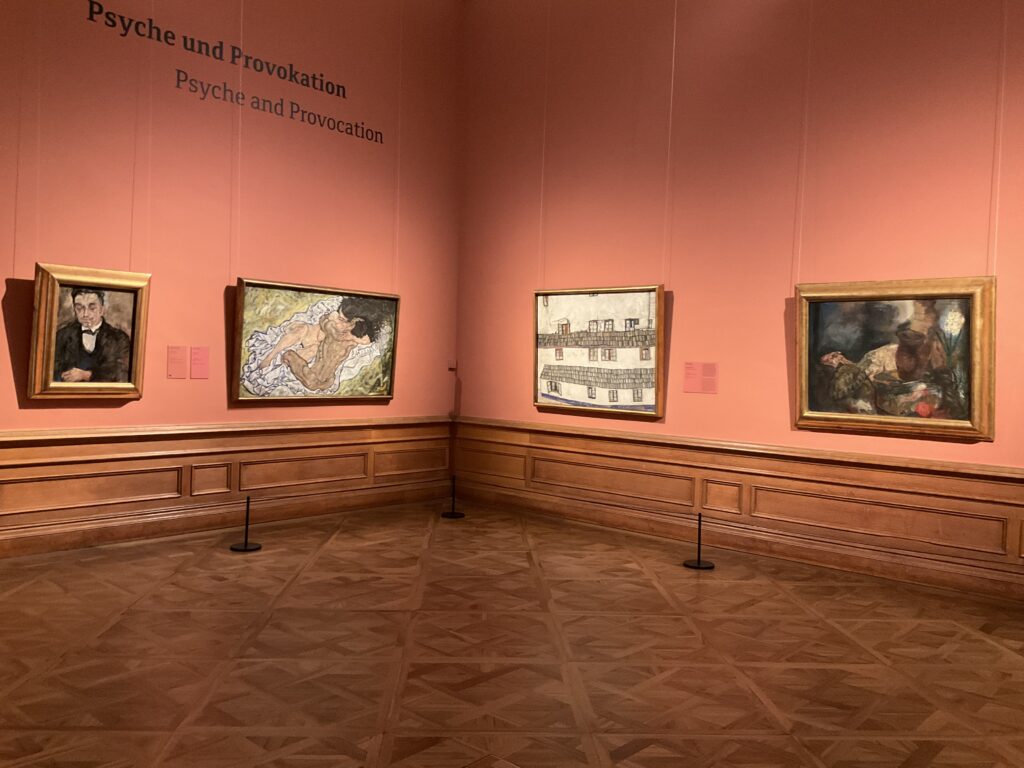
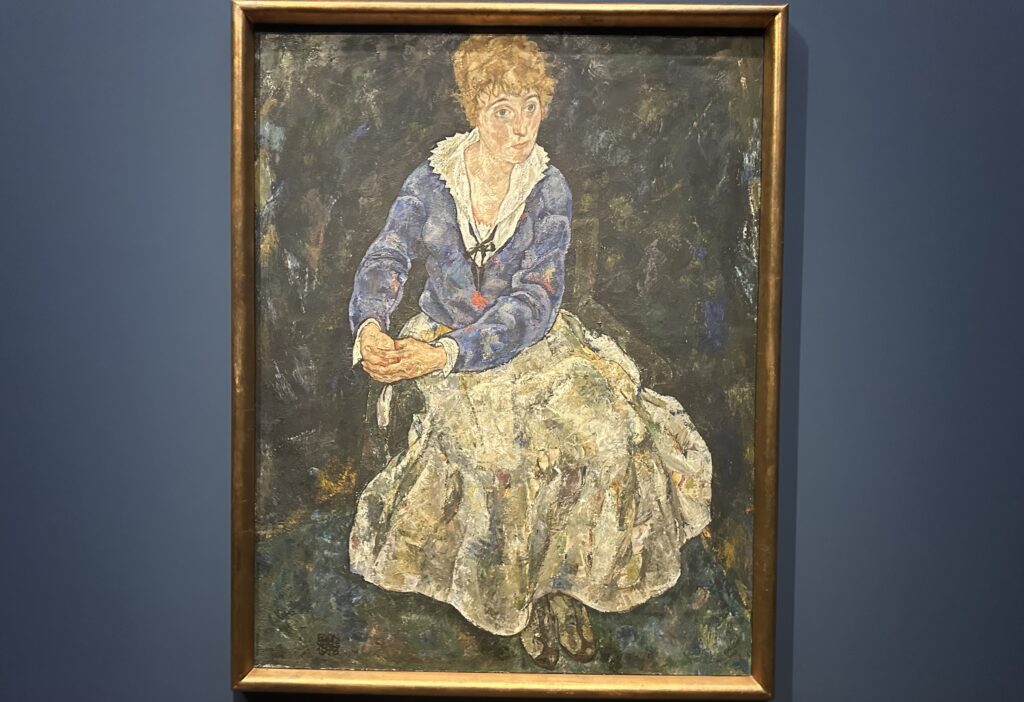
Fifteen paintings by Egon Schiele are held in the collection of the Belvedere Gallery, although only five or six works are typically on display at any one time in the permanent exhibition at the Upper Belvedere.
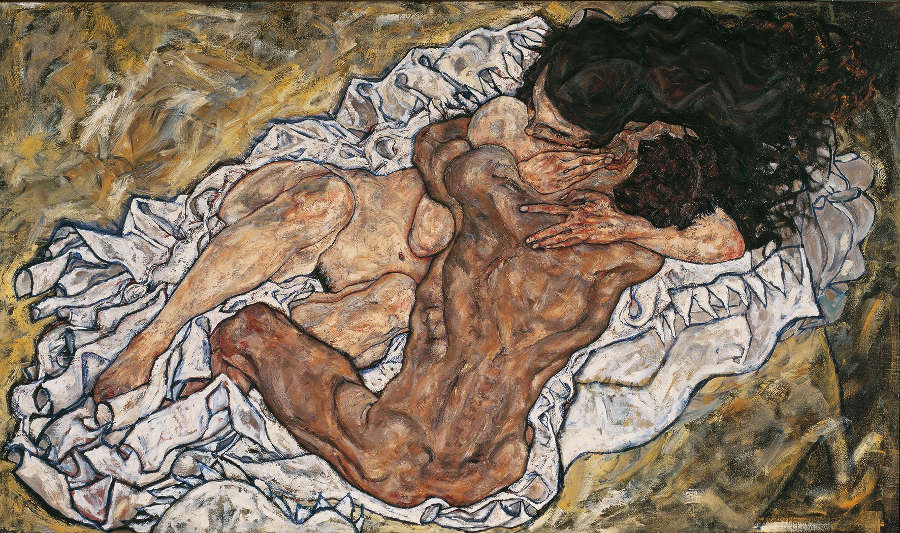
Do not be misled by the relatively small number of works on view. Their quality and significance are such that, after the Leopold Museum, the Belvedere undoubtedly houses the most important collection of Schiele’s paintings in Vienna. Among the highlights are The Embrace (1917), Death and the Maiden (1915), and The Family (1918).
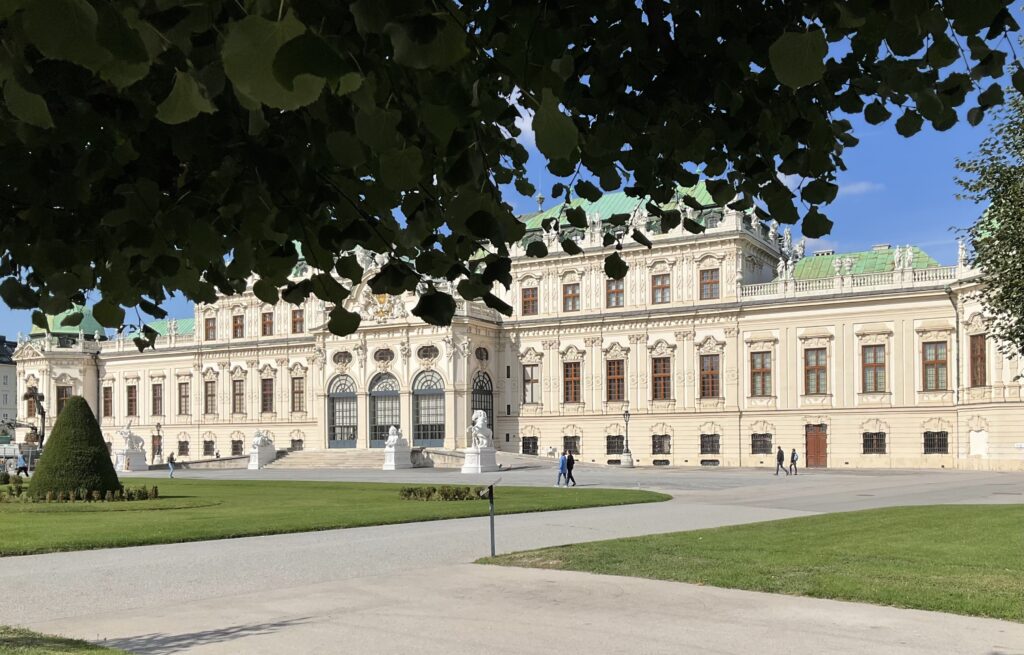
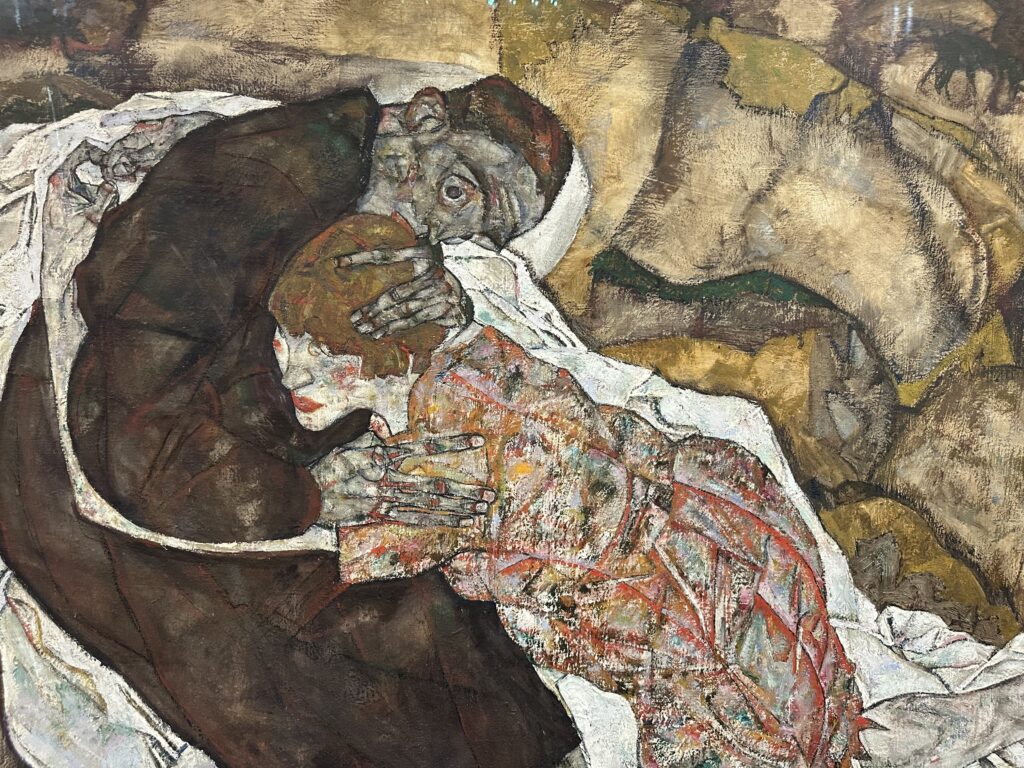
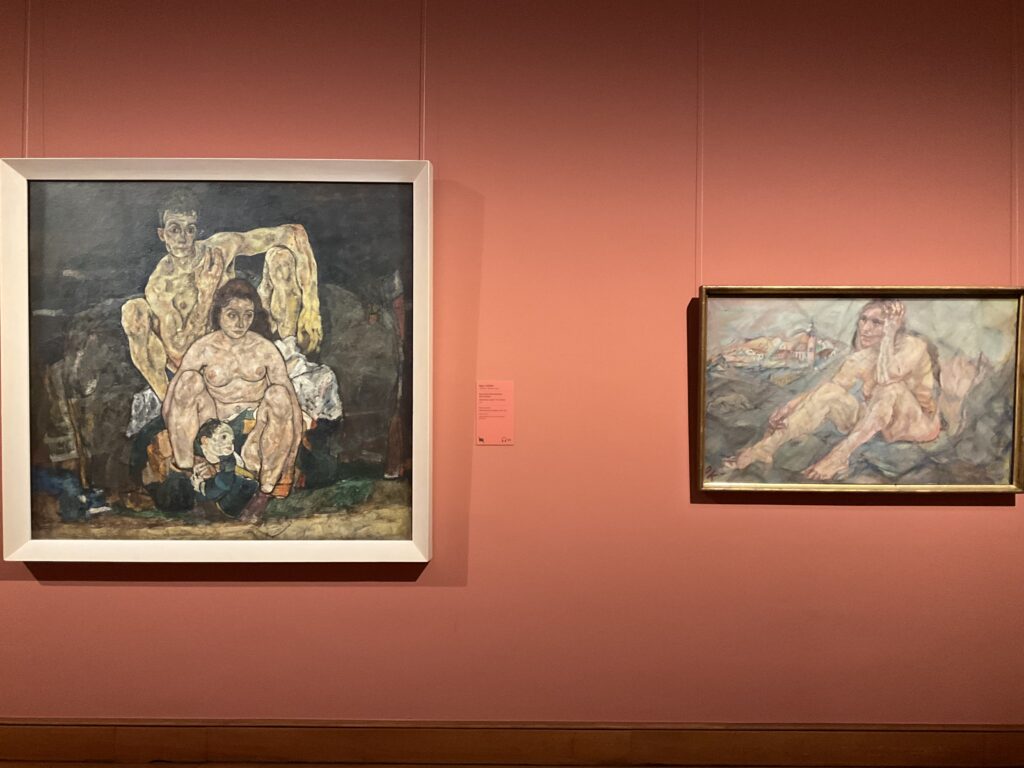
These are his largest, most meticulously executed paintings—works that the museum never disposed of, even during the years when the artist was almost entirely forgotten.
Typically, two or three canvases are displayed on the first floor in the main collection, while the rest are in small rooms on the second and topmost floor. To see his most intimate works, you will have to climb a narrow staircase that was once intended only for servants.
Address (Upper Belvedere): Prinz Eugen-Strasse 27, 1030 Vienna
Opening hours: Daily from 9:00 a.m. to 6:00 p.m.; from June through August and during the Christmas holidays, open until 7:00 p.m.
Official website of the Belvedere Museum
Belvedere Museum on Google and Apple maps
City of Vienna Museum / Wien Museum
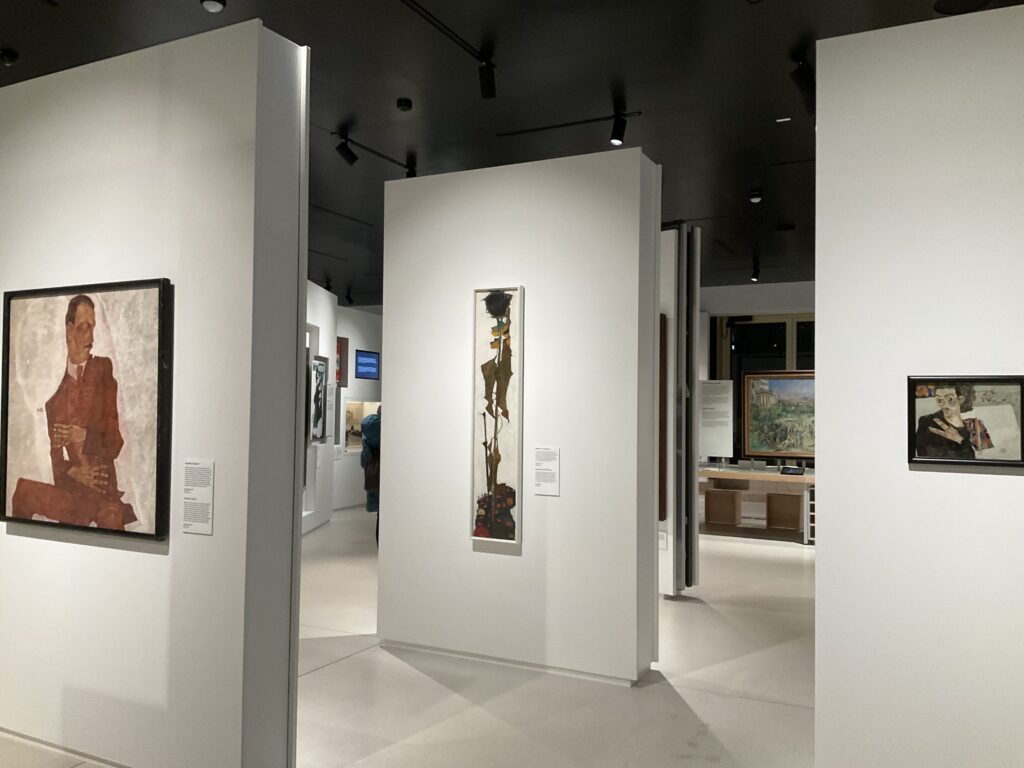
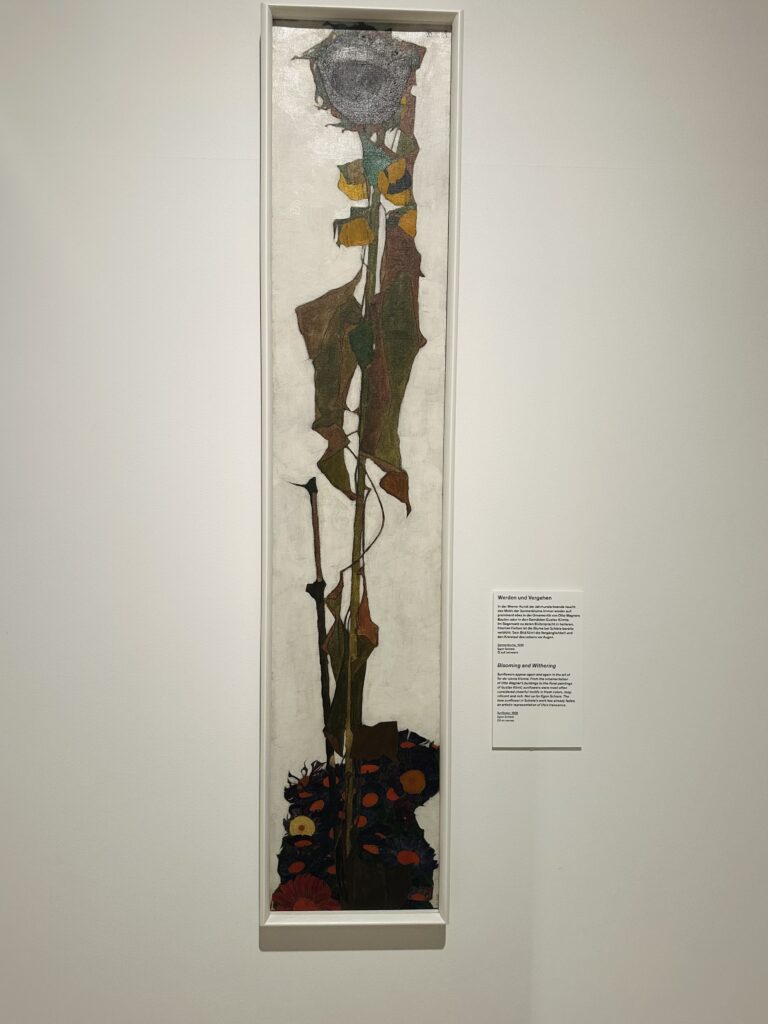
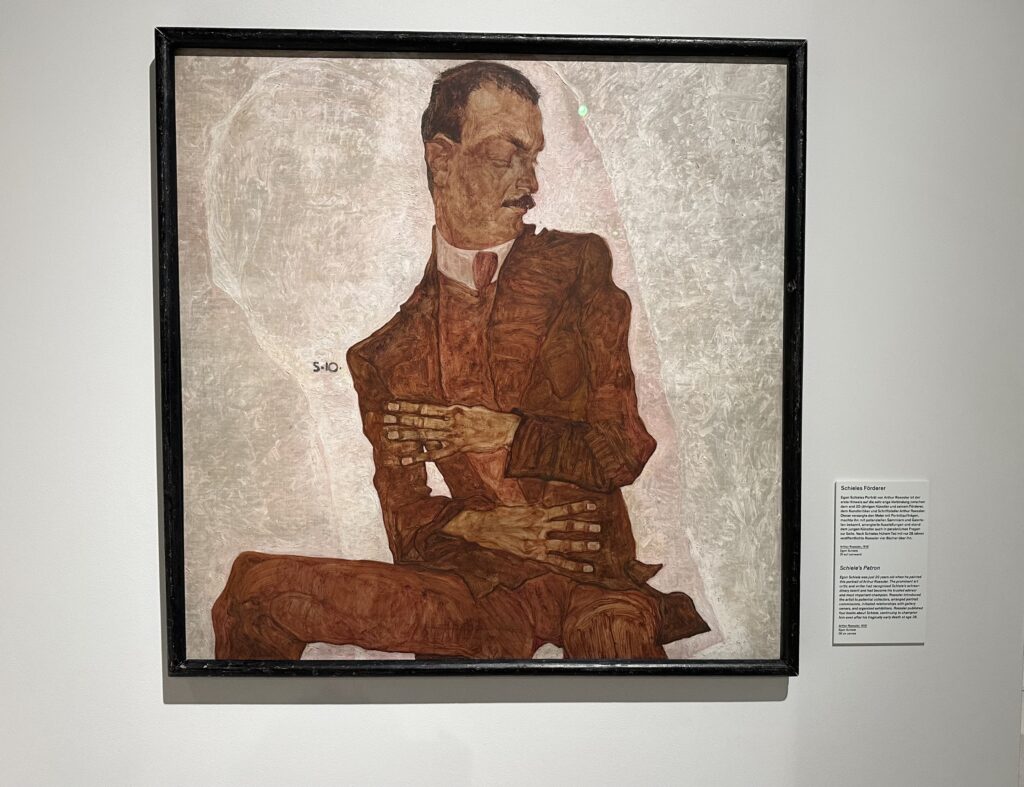
Schiele’s early paintings are also exhibited exclusively within such special projects, since the bold style for which he is now admired is only barely visible in his early work. Therefore, in the permanent exhibition you will always find recognizable works such as Sunflower (1909–10), Self-Portrait (1911), Portrait of Arthur Roessler (1910), and Young Mother (1914).
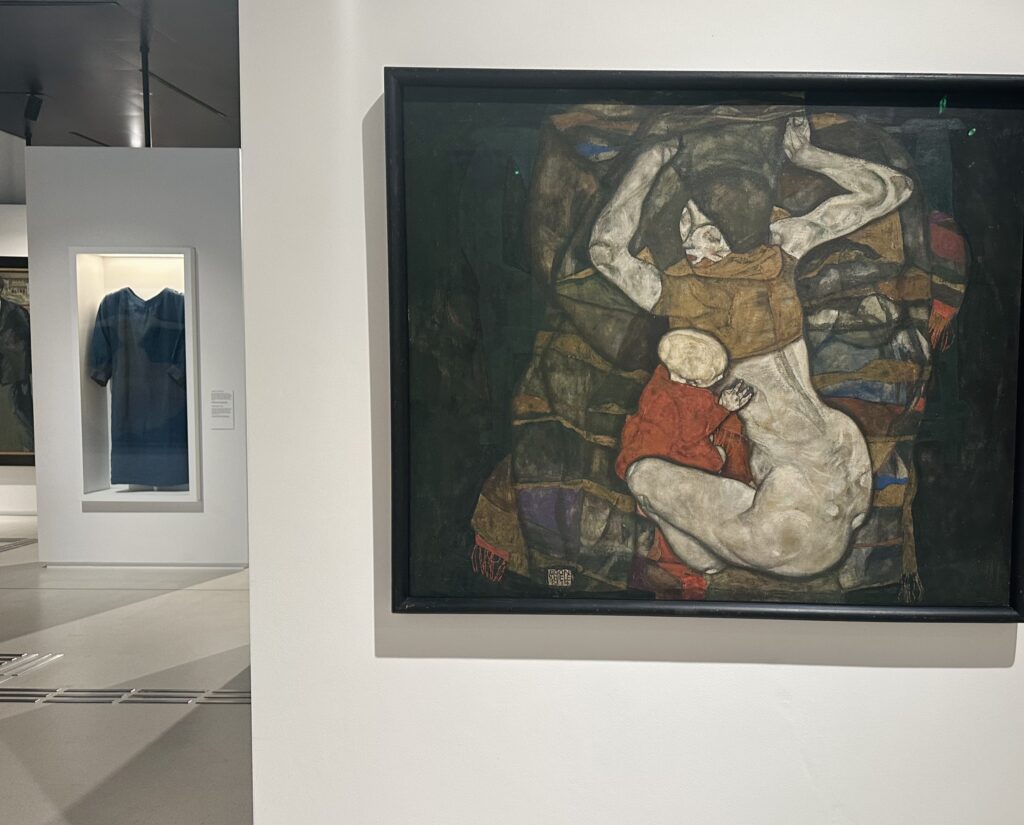
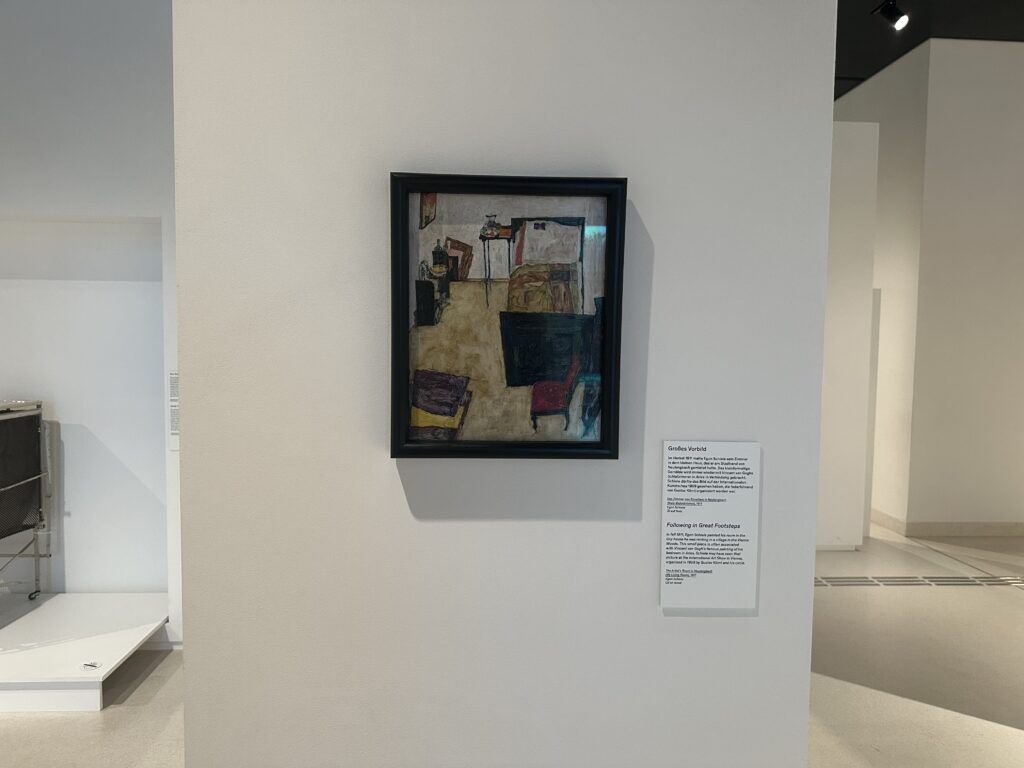
Address: 1040 Vienna, Karlsplatz 8
Opening hours: Tuesday to Friday from 9:00 a.m. to 6:00 p.m.; Saturday and Sunday from 10:00 a.m. to 6:00 p.m.
Admission: Free for the permanent exhibition
Albertina
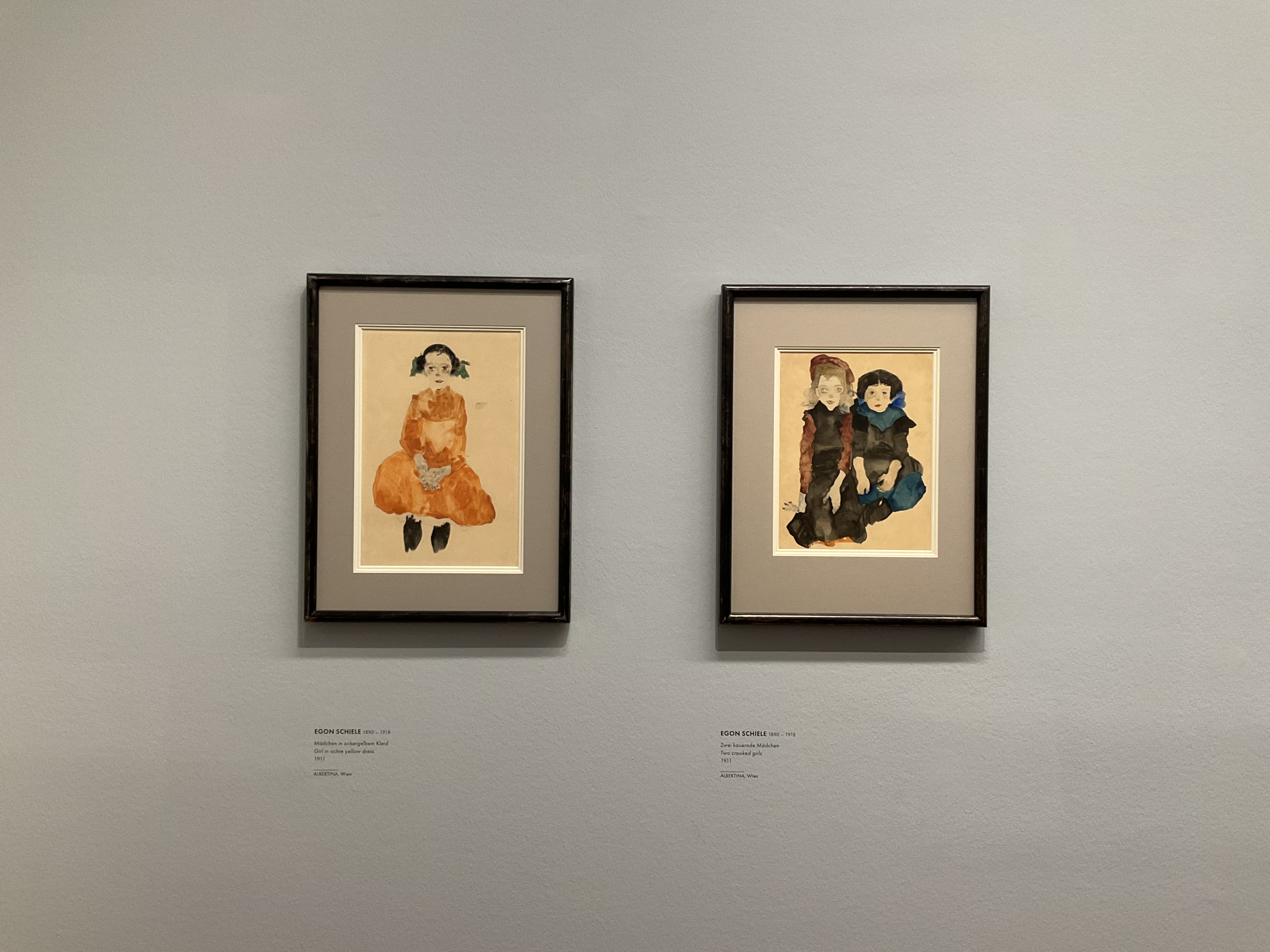
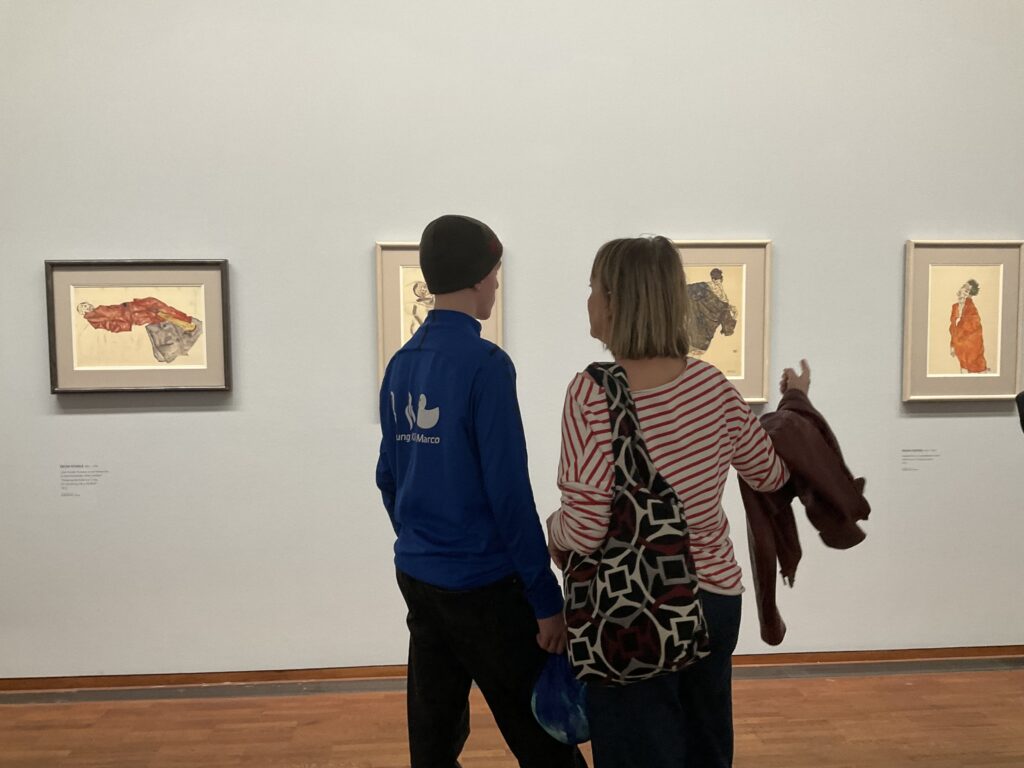
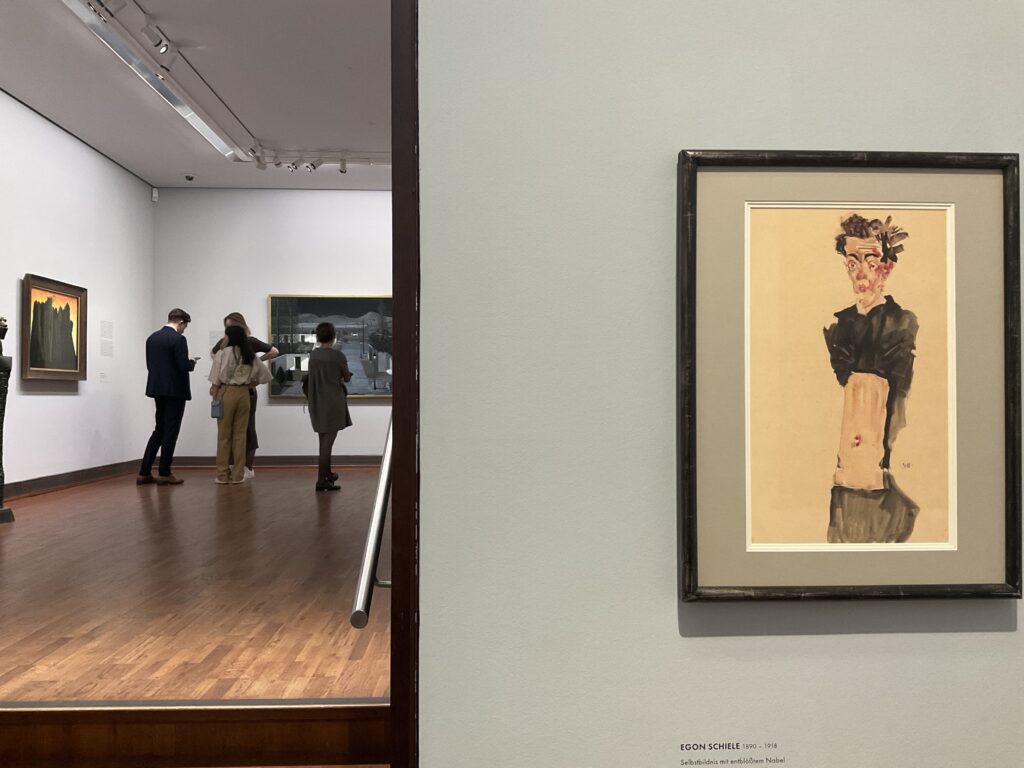
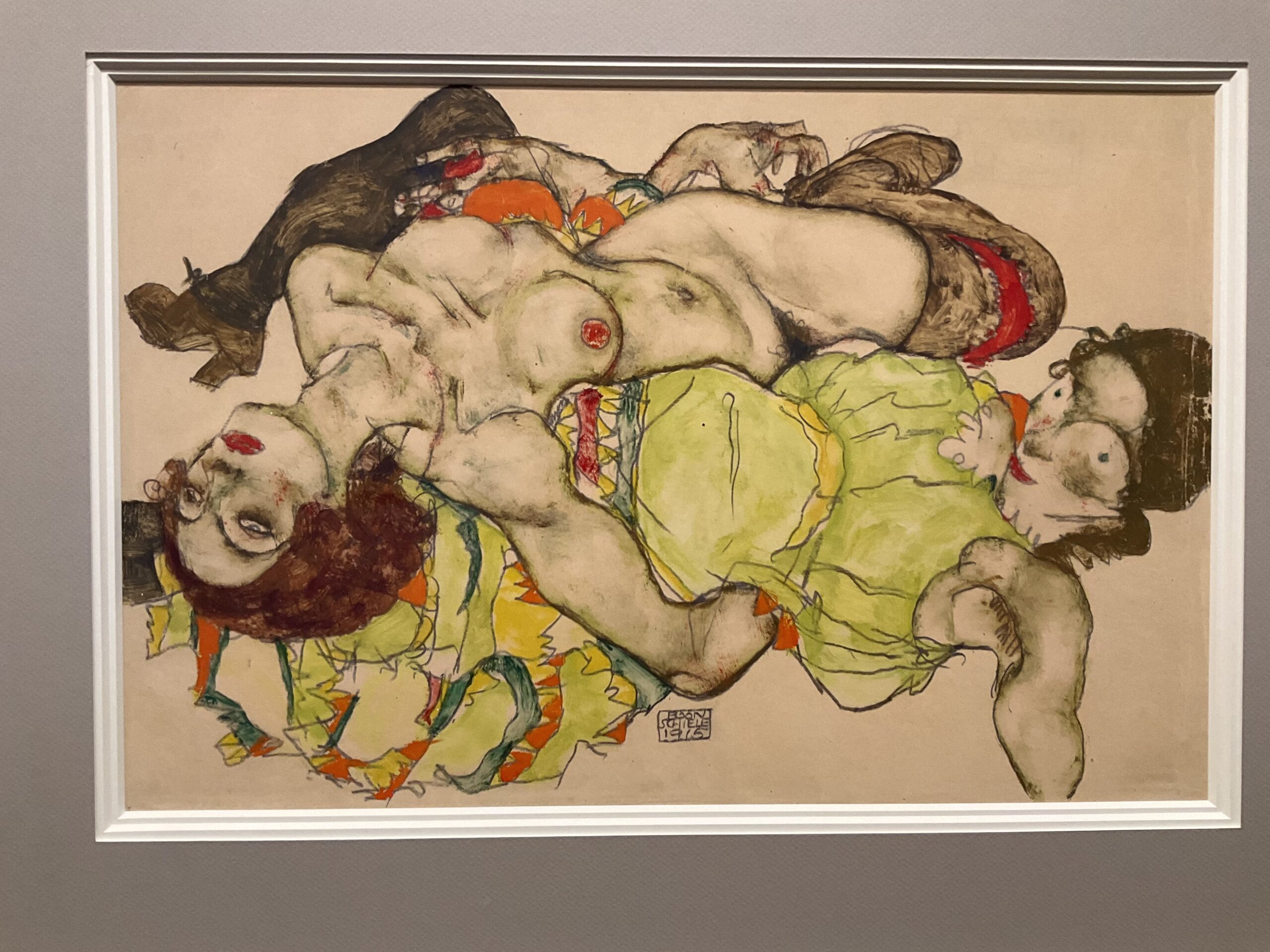
This is the largest collection of Schiele’s graphic works, but there is no guarantee that, upon visiting the museum, you will see even a single one of the more than two hundred sheets in the collection. The curators try to include Schiele in every temporary exhibition for which the museum is so well known, provided it is thematically possible.
Often, three or four watercolours are included in the permanent exhibition From Monet to Picasso, while copies are displayed in the palace section of the museum. So if you are hunting specifically for Schiele, it is advisable to check the exhibition schedule in advance—otherwise you may be disappointed.
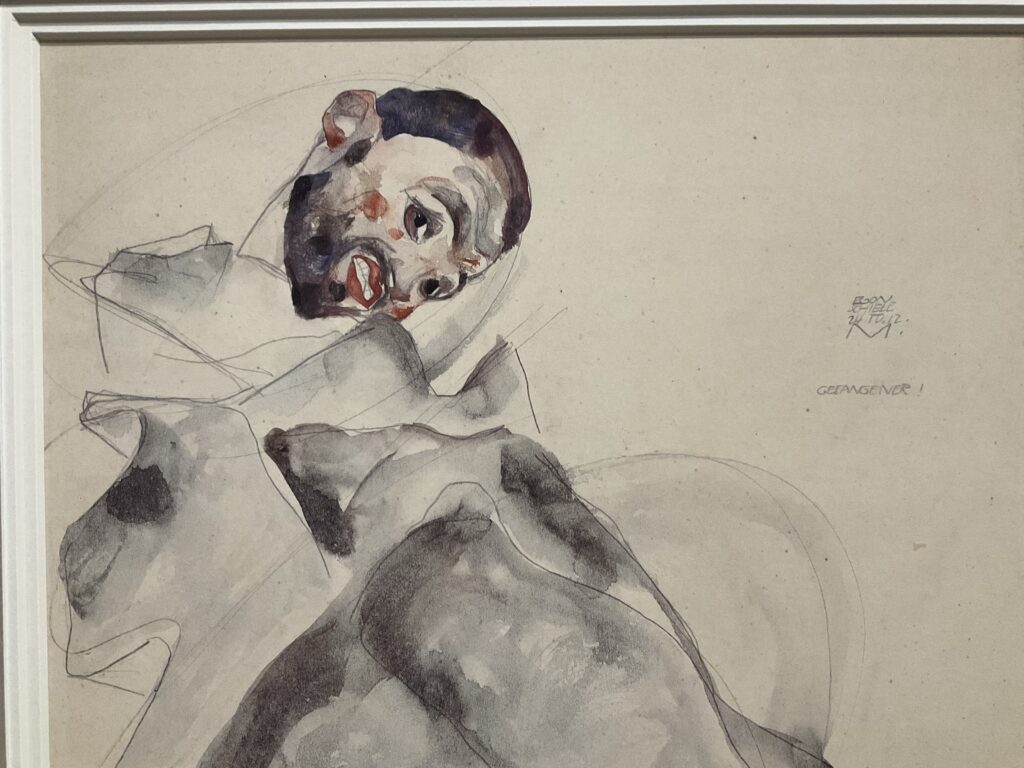
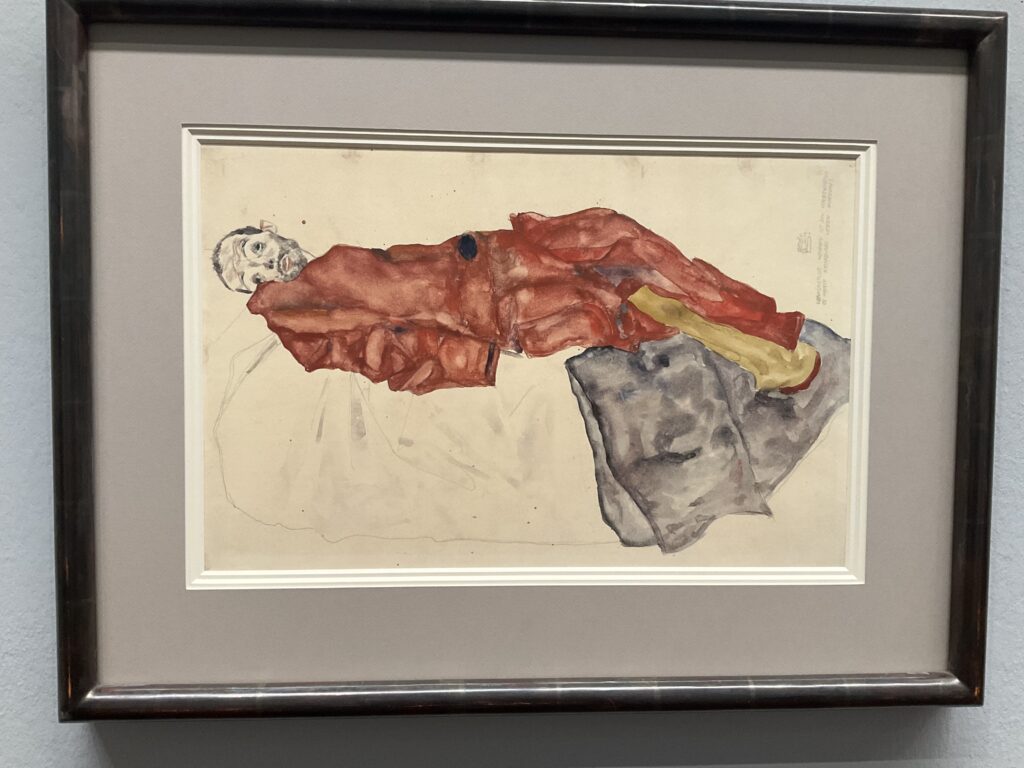
Address: Albertinaplatz 1, 1010 Vienna
Opening hours: Daily from 10:00 a.m. to 6:00 p.m.
Official website of the Albertina Museum
The Albertina on Apple and Google maps
Dorotheum in Palais Kinsky
Given the sheer number of the artist’s drawings and the history of private Viennese collections after the two world wars, it is hardly surprising that Schiele’s works are still sold on the open market today, and that anyone can, two to four times a year, if not purchase them, at least view typically little-known works offered for sale to the public. They are usually to be found in the exhibition rooms of the auction houses Dorotheum and Kinsky in October–November and April–May. After the auctions, the works are entered into the digital archive of all Egon Schiele’s works, maintained and curated by the Calier Research Institute.
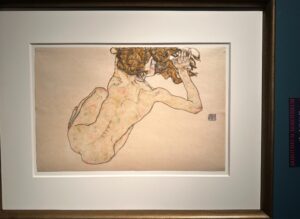
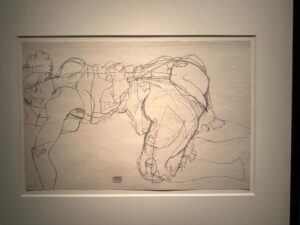
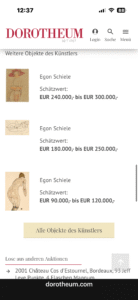
Address Dorotheum: Dorotheergasse 17, 1010 Vienna.
Address ImKinsky: Palais Kinsky Freyung 4, Vienna
Official websites Dorotheum and ImKinsky
Lower Austria: flats, prisons and walking trails
Any work of art inevitably bears the imprint of the artist’s personality. Every viewer is free to choose how deeply they wish to engage with that background, since a great painting can stand entirely on its own without explanation. Yet for me, visiting the places where Egon Schiele lived and worked, found joy or endured suffering, greatly intensified the impact of his art. If you are willing to take a short trip from Vienna, one of these places — where both living memories and original works survive — may reveal new dimensions of your understanding of this remarkable artist.
Tulln on the Danube
Schiele was born in one of those provincial towns where little seems to have changed for centuries. This has helped preserve both the atmosphere and many of the landmarks of his hometown much as the artist himself would have known them.
Schiele’s Birthplace Museum Flat
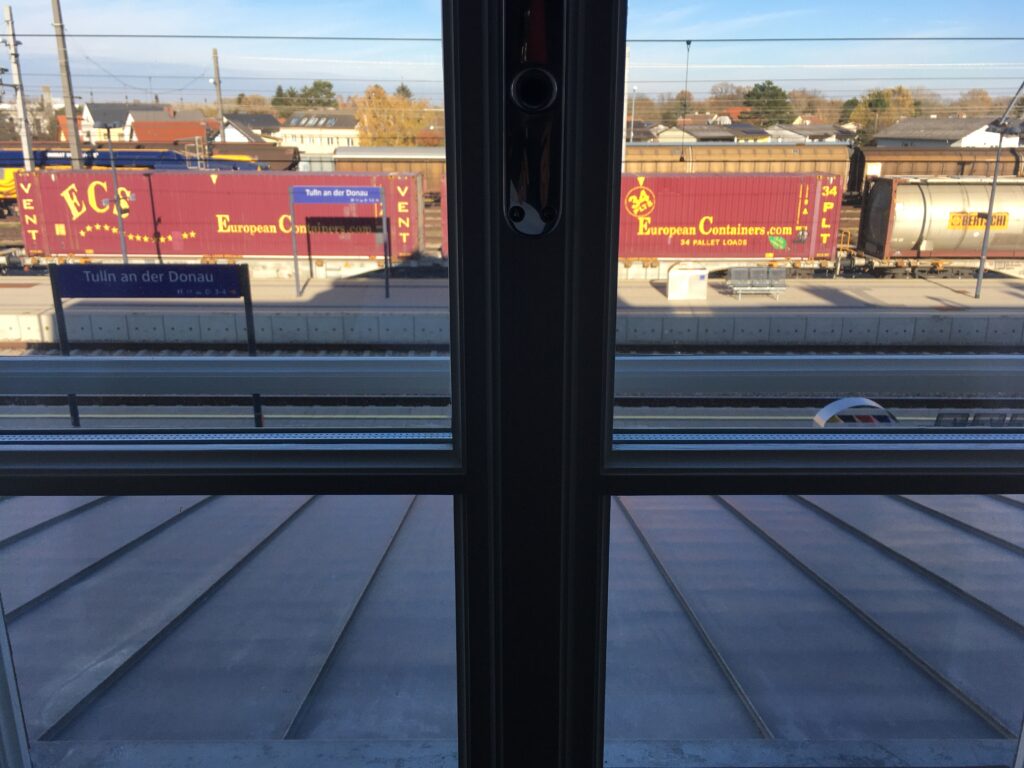
The easiest way to reach Tulln is by train from Vienna: in just 30–40 minutes you arrive at the station and, straight from the platform, can look into the windows of the former railway apartment where the Schiele family lived. Today, the flat is a self-service museum. Drop a coin into the box and you are free to wander through the spacious quarters of Adolf Schiele, head of the local railway station, his wife Marie, and their four children. It was here that Egon Leo Adolf Ludwig Schiele was born on 12 June 1890.
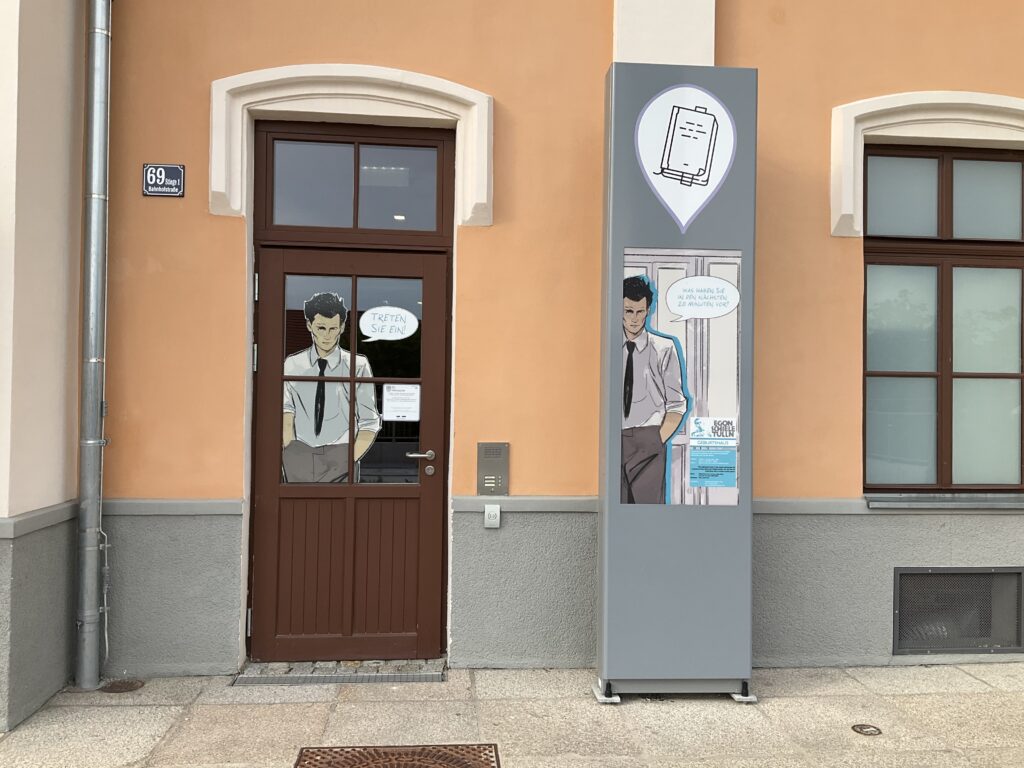
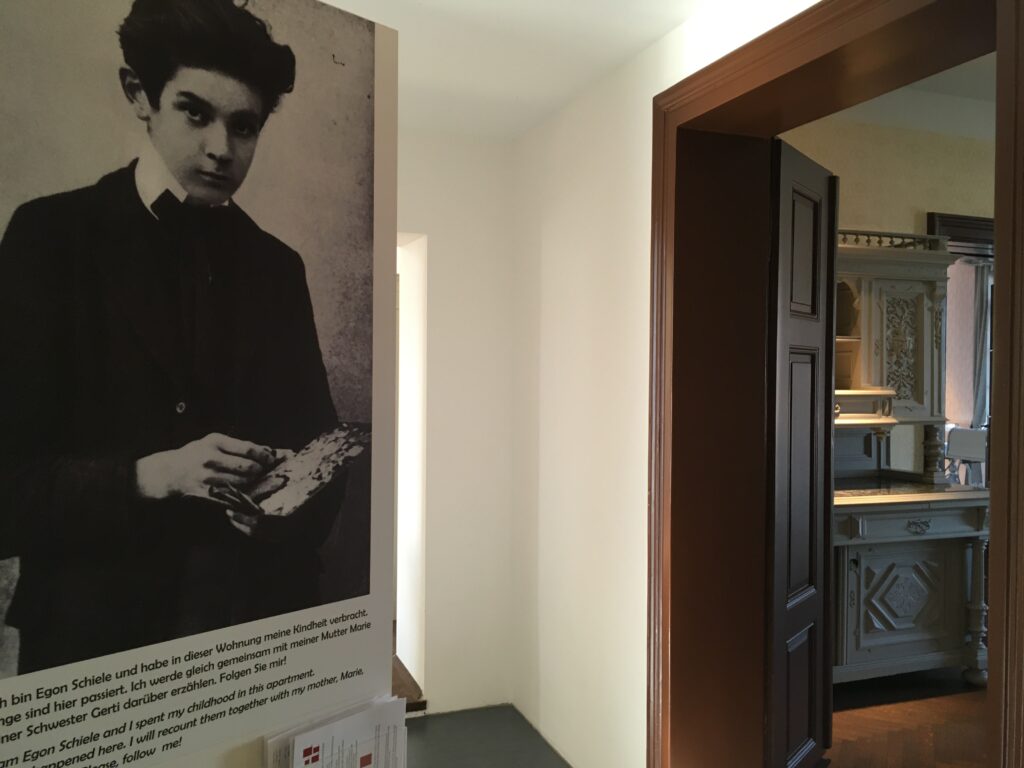
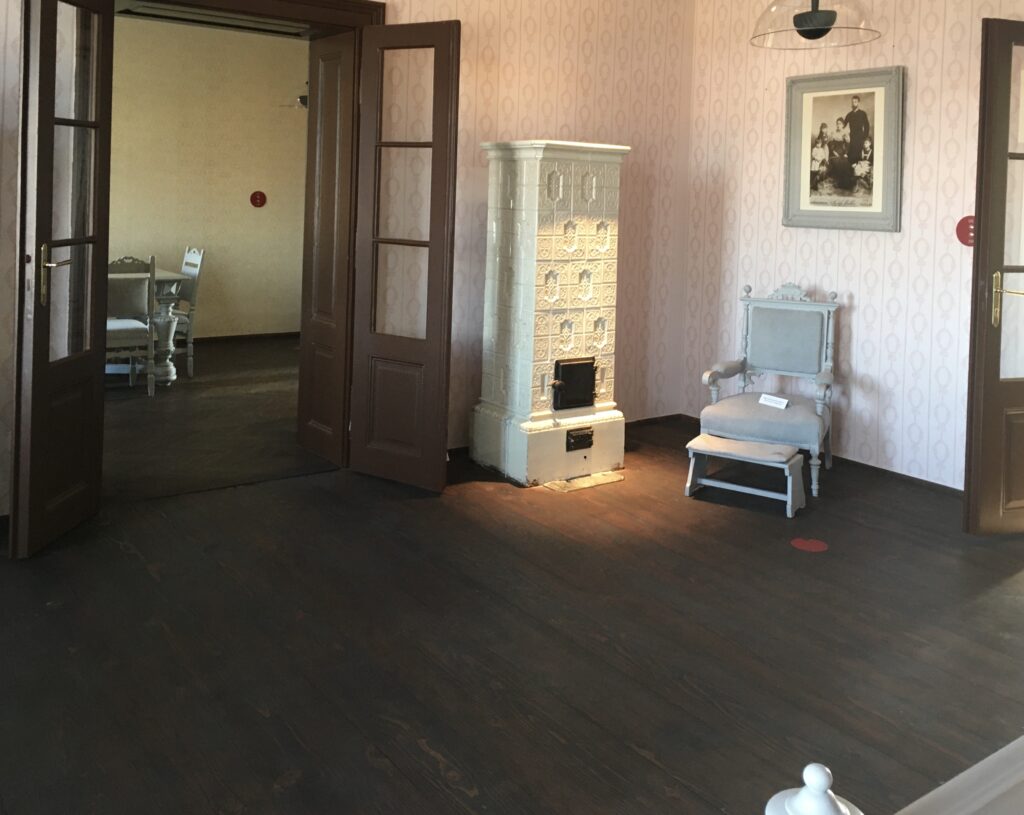
It is here, perhaps more than anywhere else, that you can come closest to the images of Schiele’s childhood. None of the original furnishings have survived, so the beds, tables and other household items are not the actual pieces once used by the family, but rather period furnishings typical of their time and social milieu. Yet the museum’s creators deserve great credit: from little more than photographs, recordings and fragments of memory, they have woven an atmosphere that feels remarkably vivid and evocative. If you share the belief that we are all shaped by our childhood, your understanding of Schiele is likely to become deeper and more nuanced after a visit to this museum.
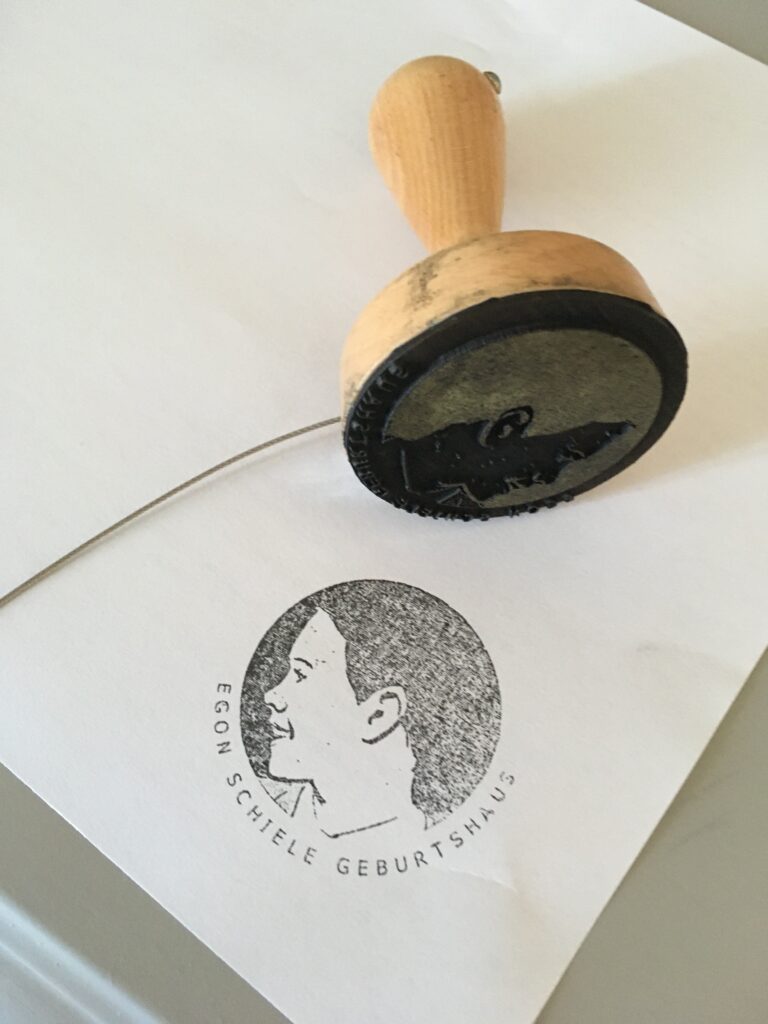
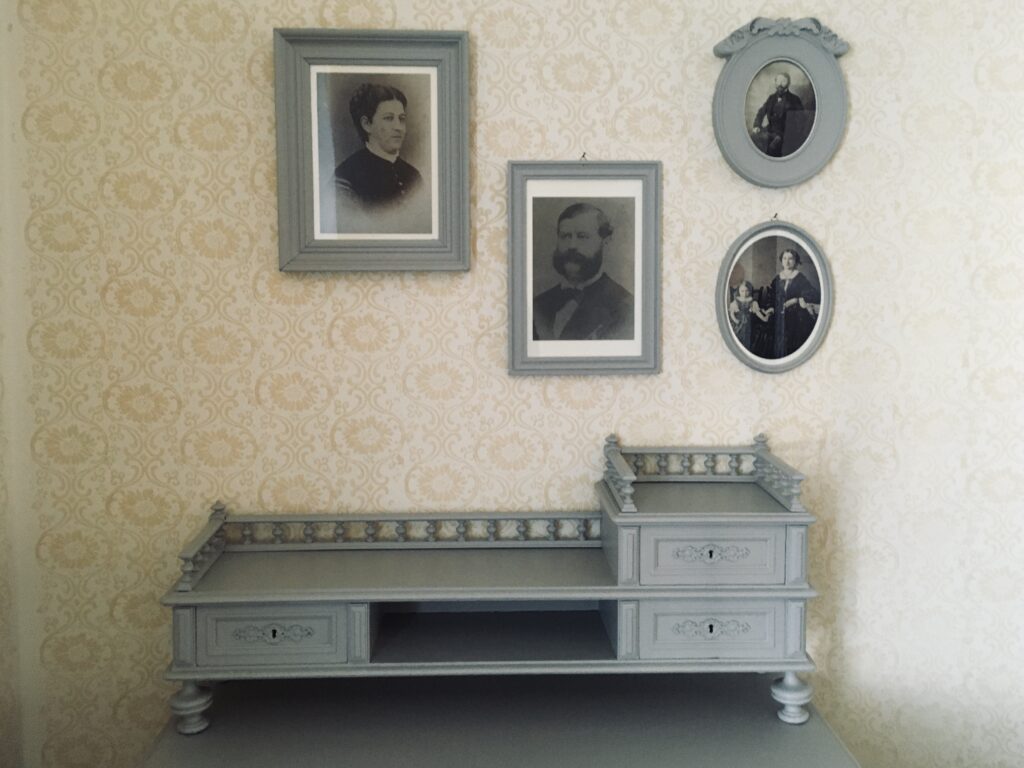
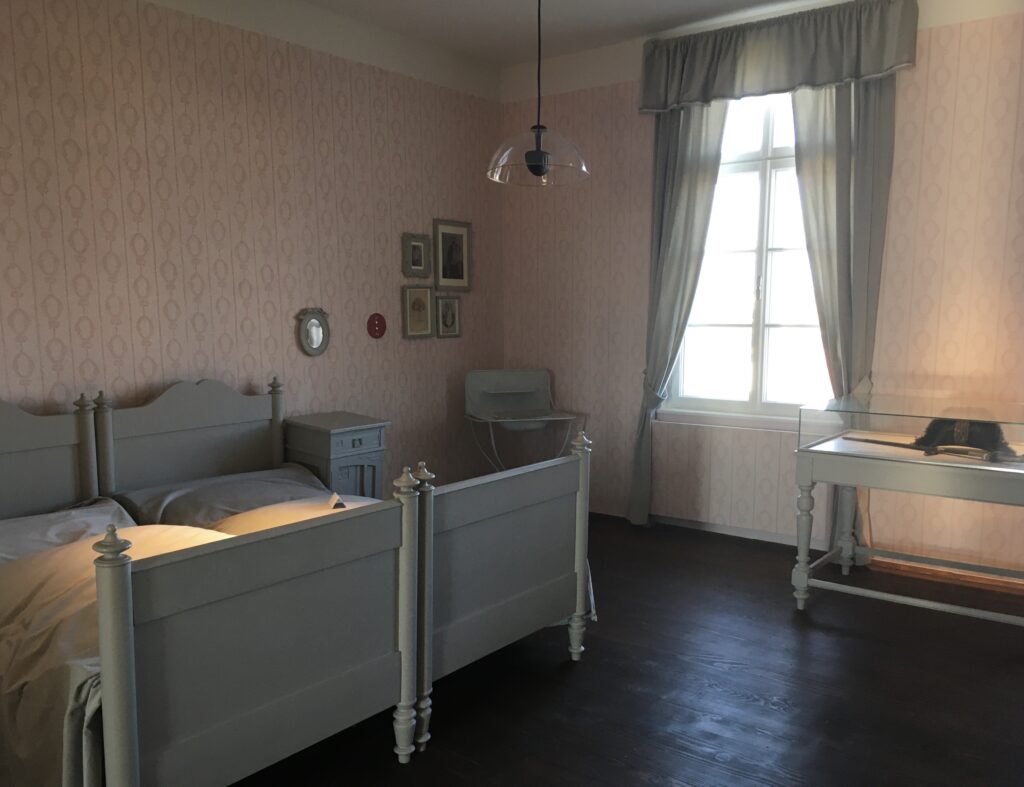
Address: Bahnhofstraße 69, 3430 Tulln
Opening hours: Daily from April to October, 9:00–20:00; from November to March, 9:00–17:00.
Admission: A €2 coin is required for entry (self-service system).
Official website of the Museum flat: Schiele Birthplace Tulln
Schiele’s birthplace on Google and Apple maps
Schiele Trail
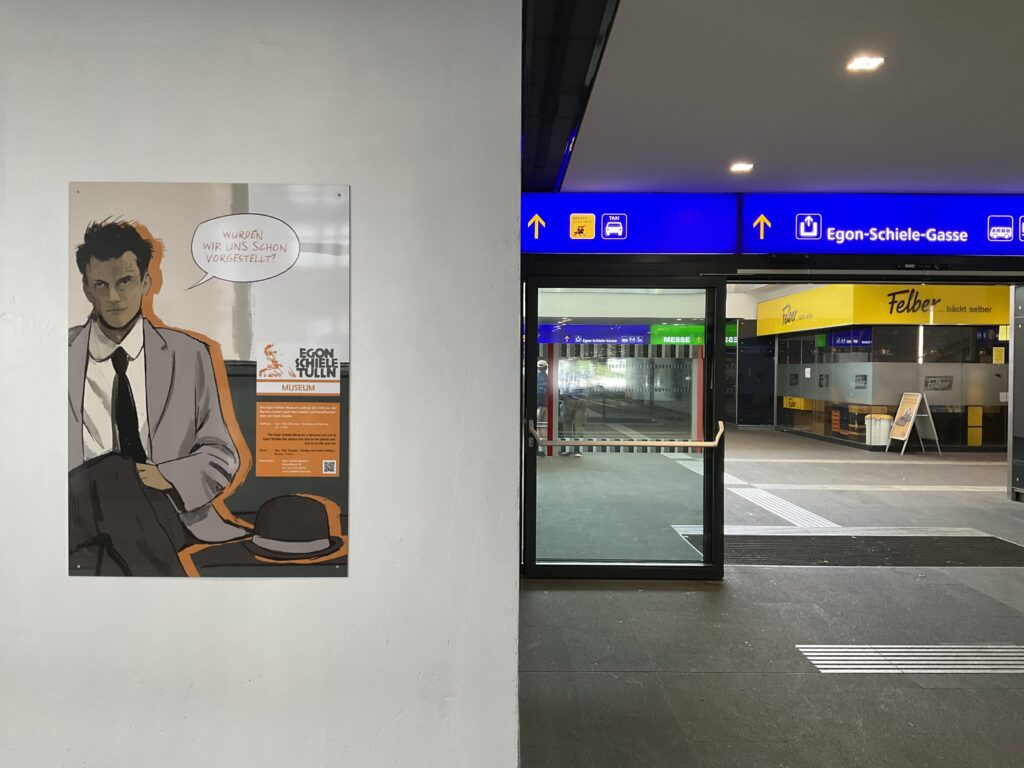
Even from the entrance to the underground passage — the modern gateway to the town — it is clear that the people of Tulln take pride in their famous native son: reproductions of his works greet you here. On Schiele’s streets, you will find clearly visible signs that guide you towards the town centre. As well as showing you the most convenient route and helping you avoid getting lost, they also lead you past various local landmarks — and “non-landmarks” alike — places that were significant in the childhood of the young Egon.
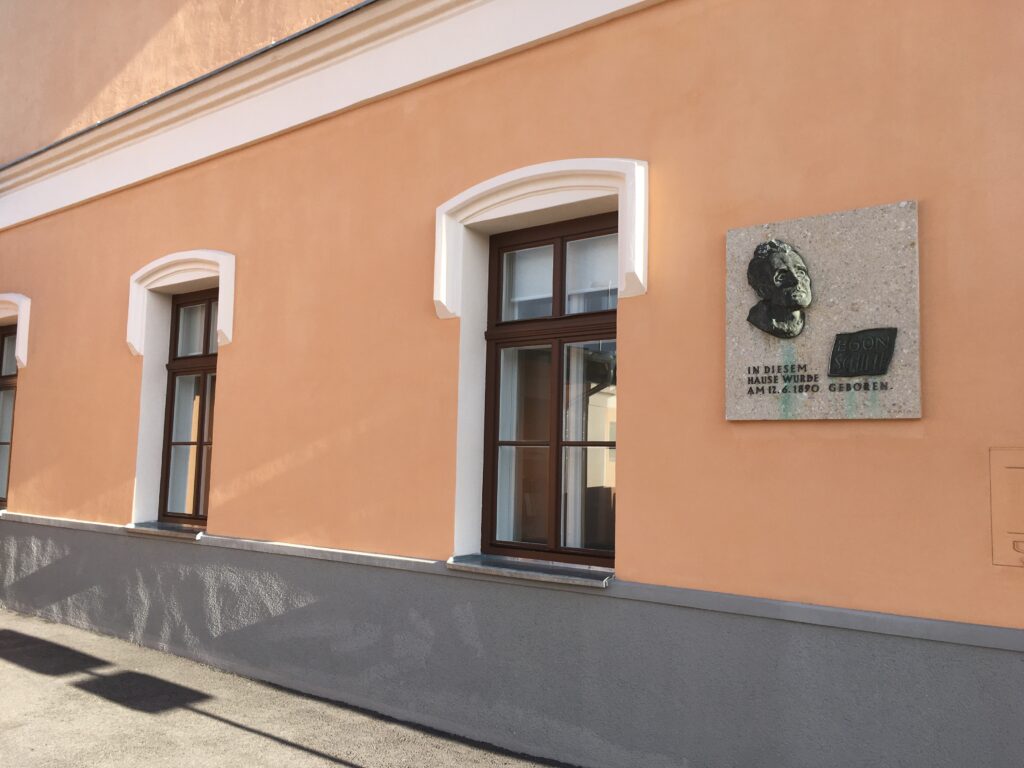
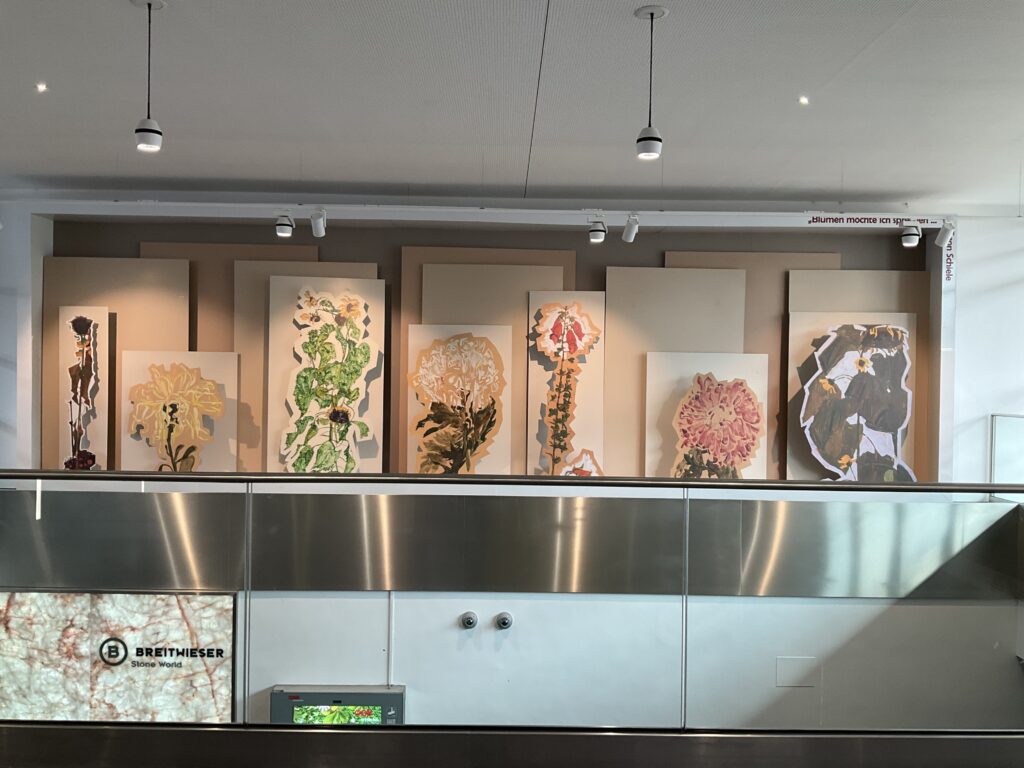
Scattered here and there, stones with metal objects and information panels are clearly visible. Alongside the German and English text, each of them also features a QR code. Scan it and you will hear short audio recordings, such as excerpts from letters written by family members (in German), or see rare photographs.
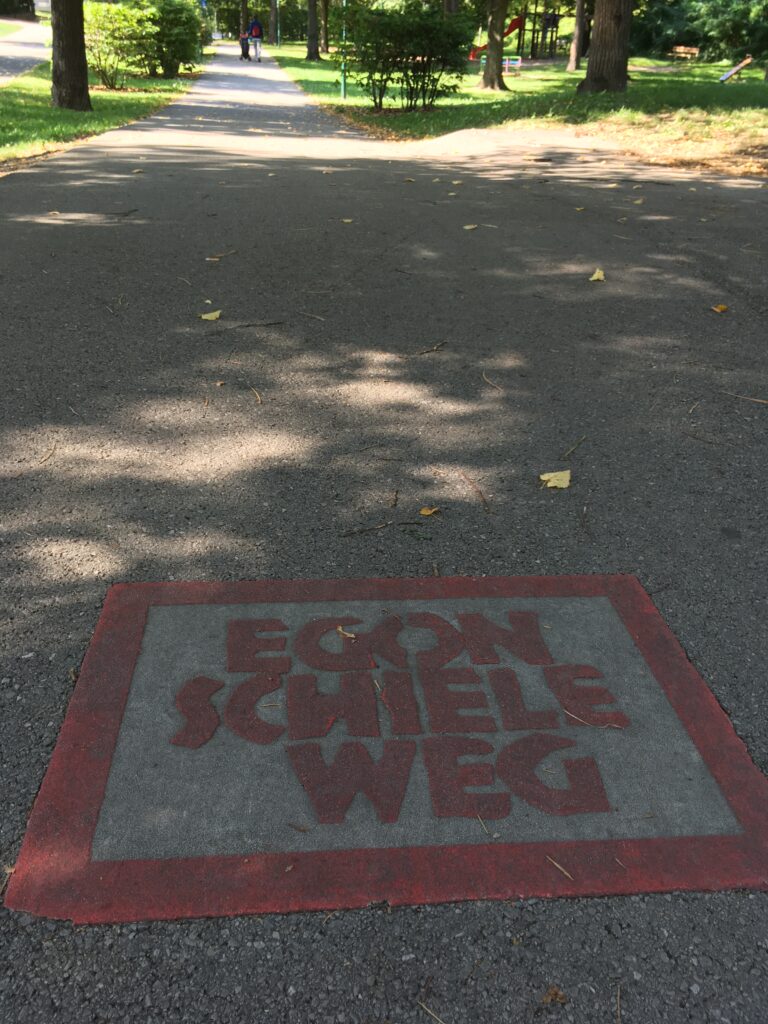
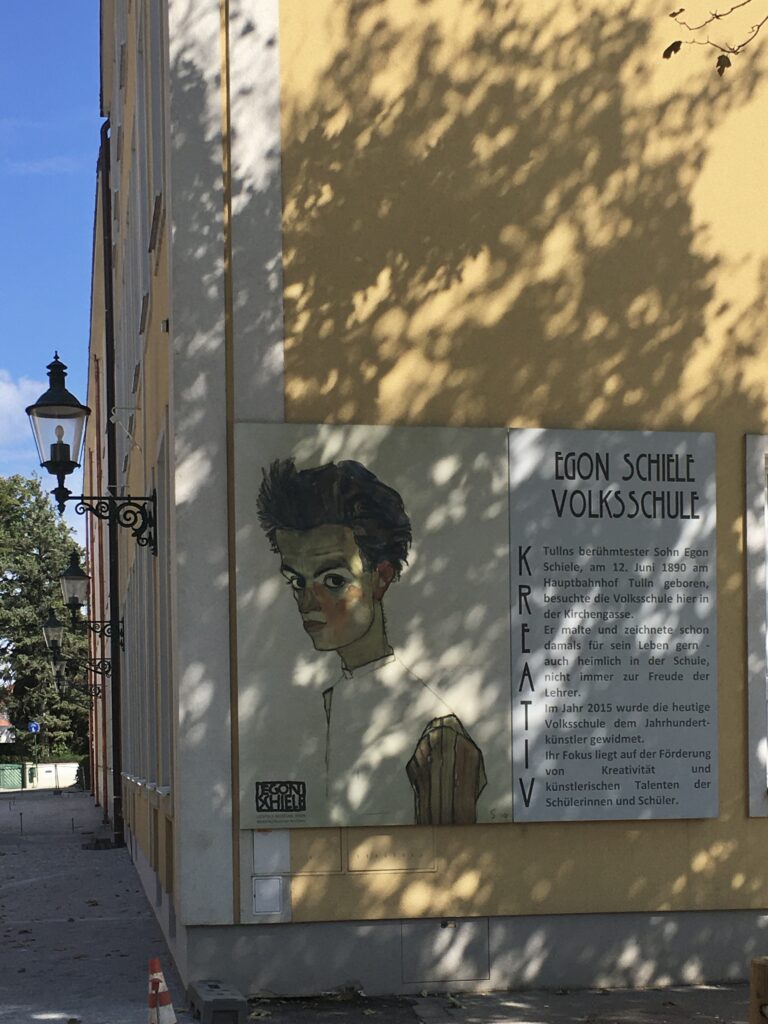
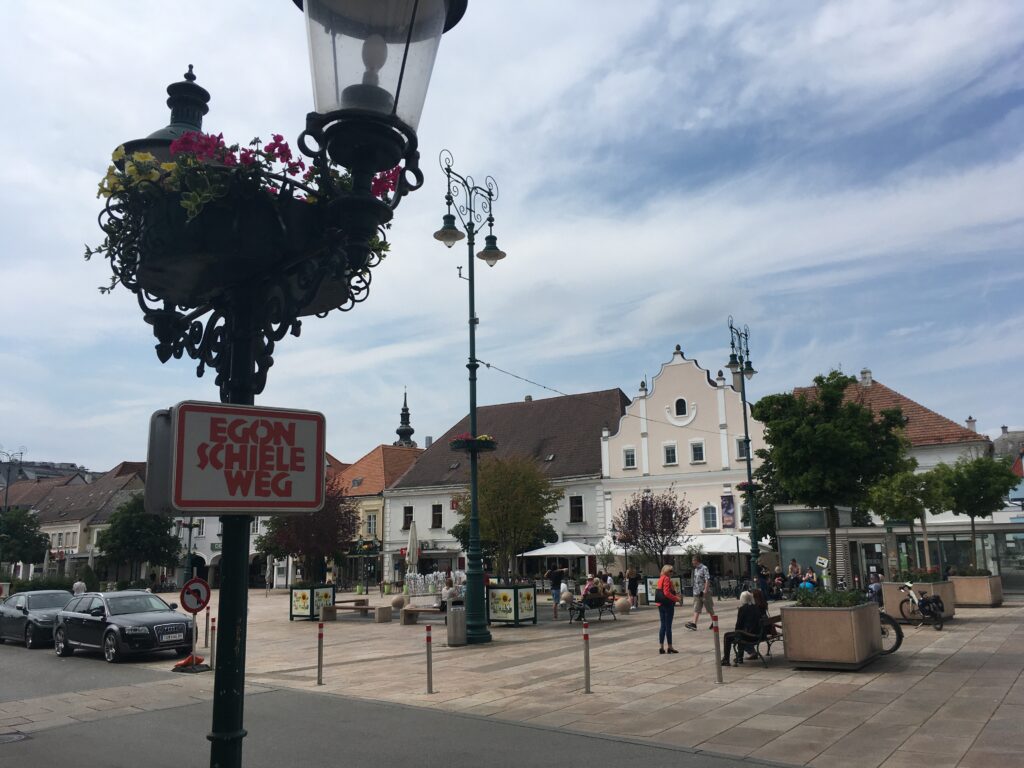
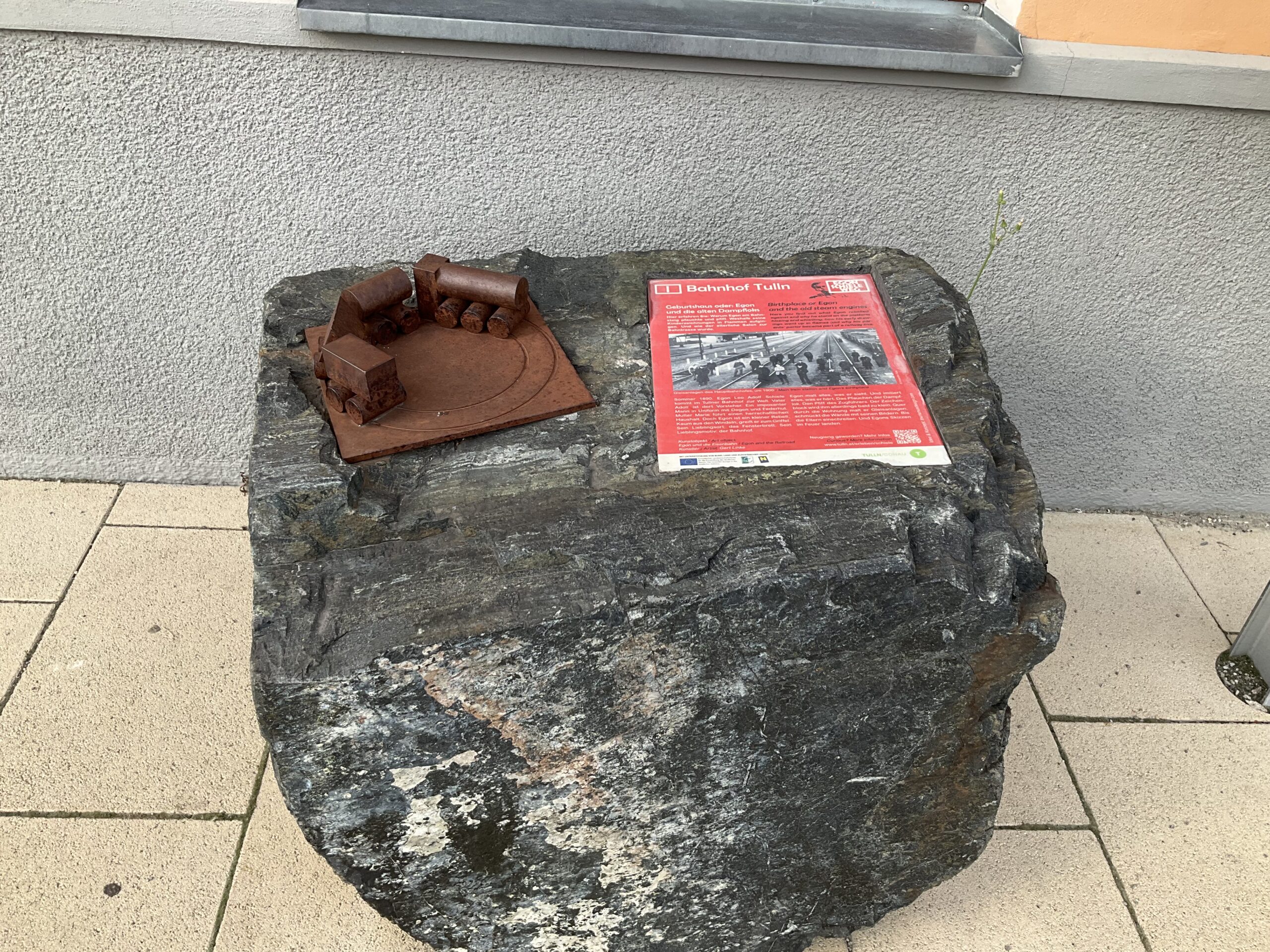
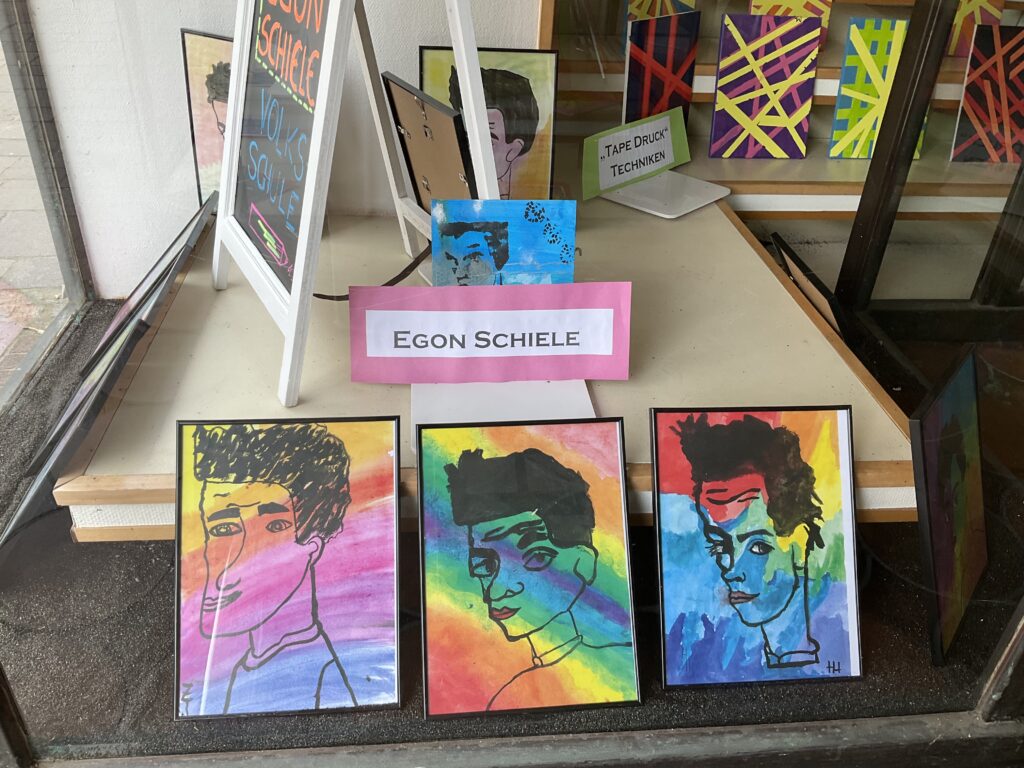
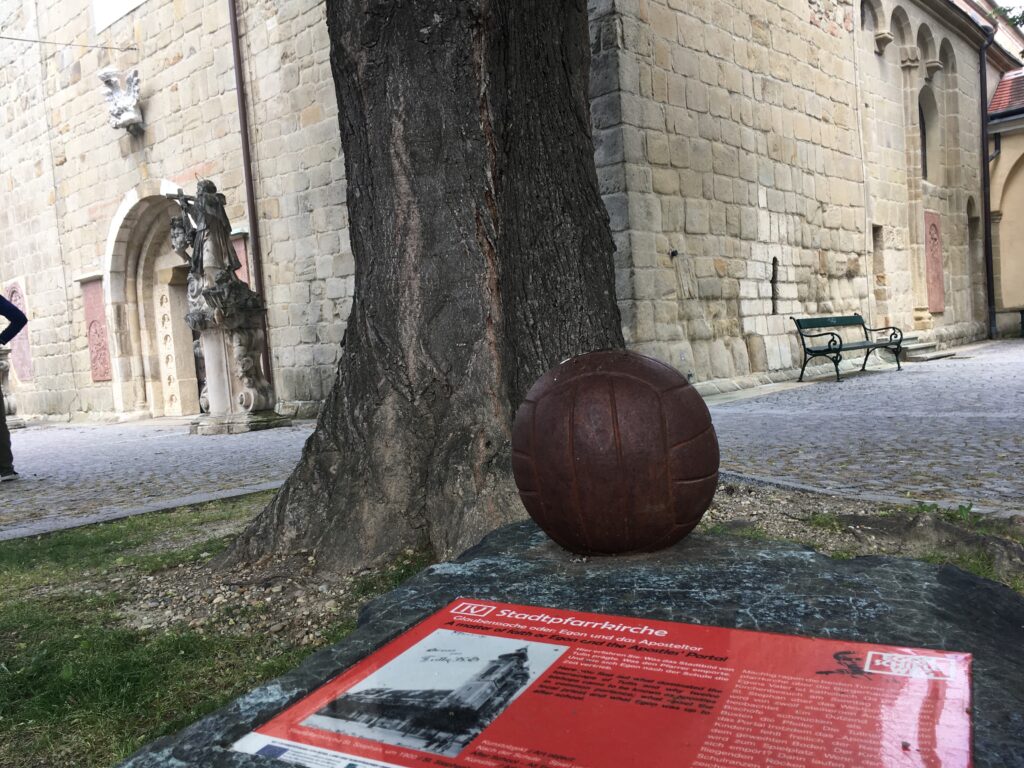
Start of the trail: Bahnhofstraße 69, 3430 Tulln
Length: 3.6 km
Official page on the City of Tulln website
Starting (and ending) point on Google and Apple maps
Schiele Museum
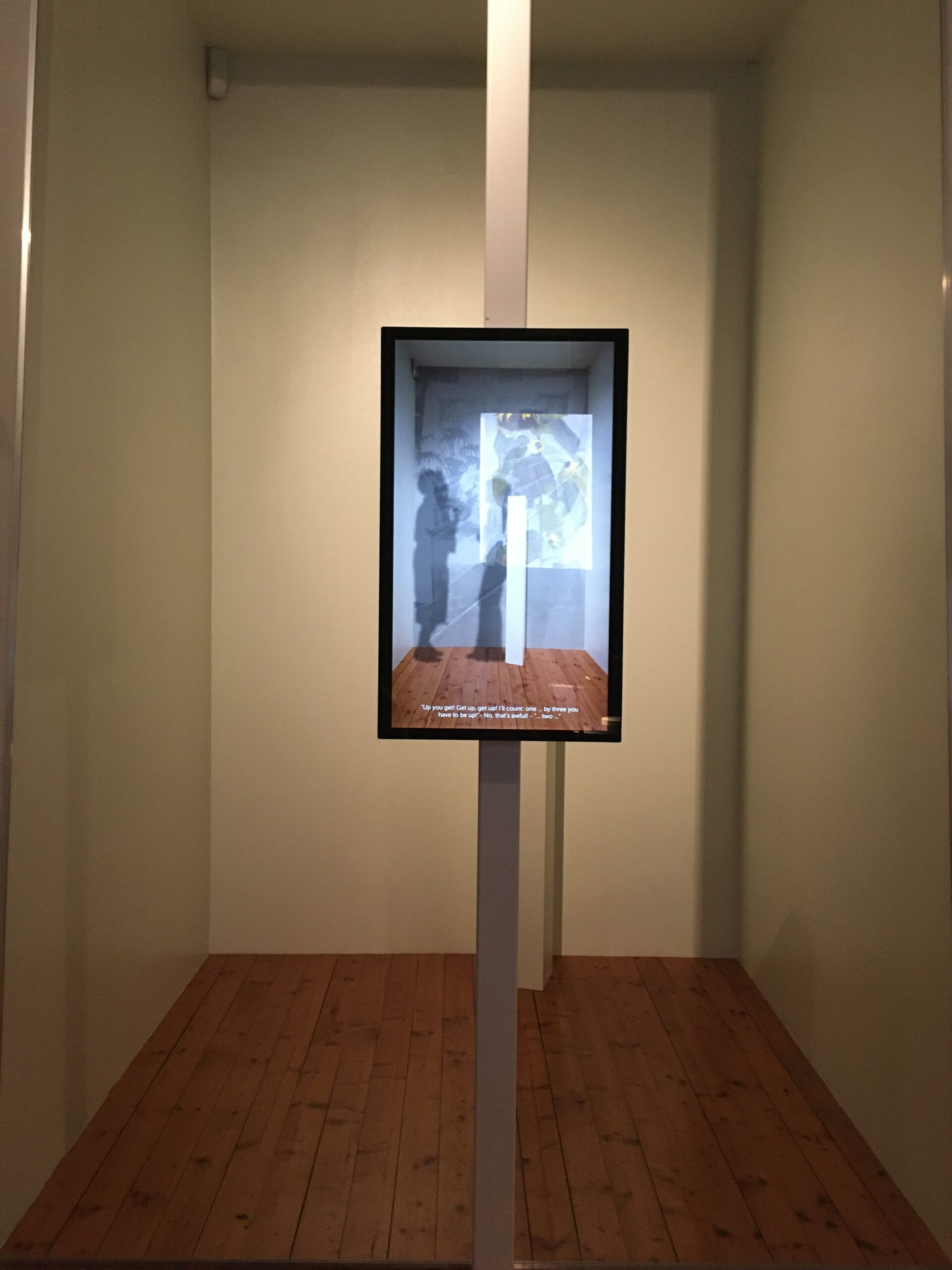
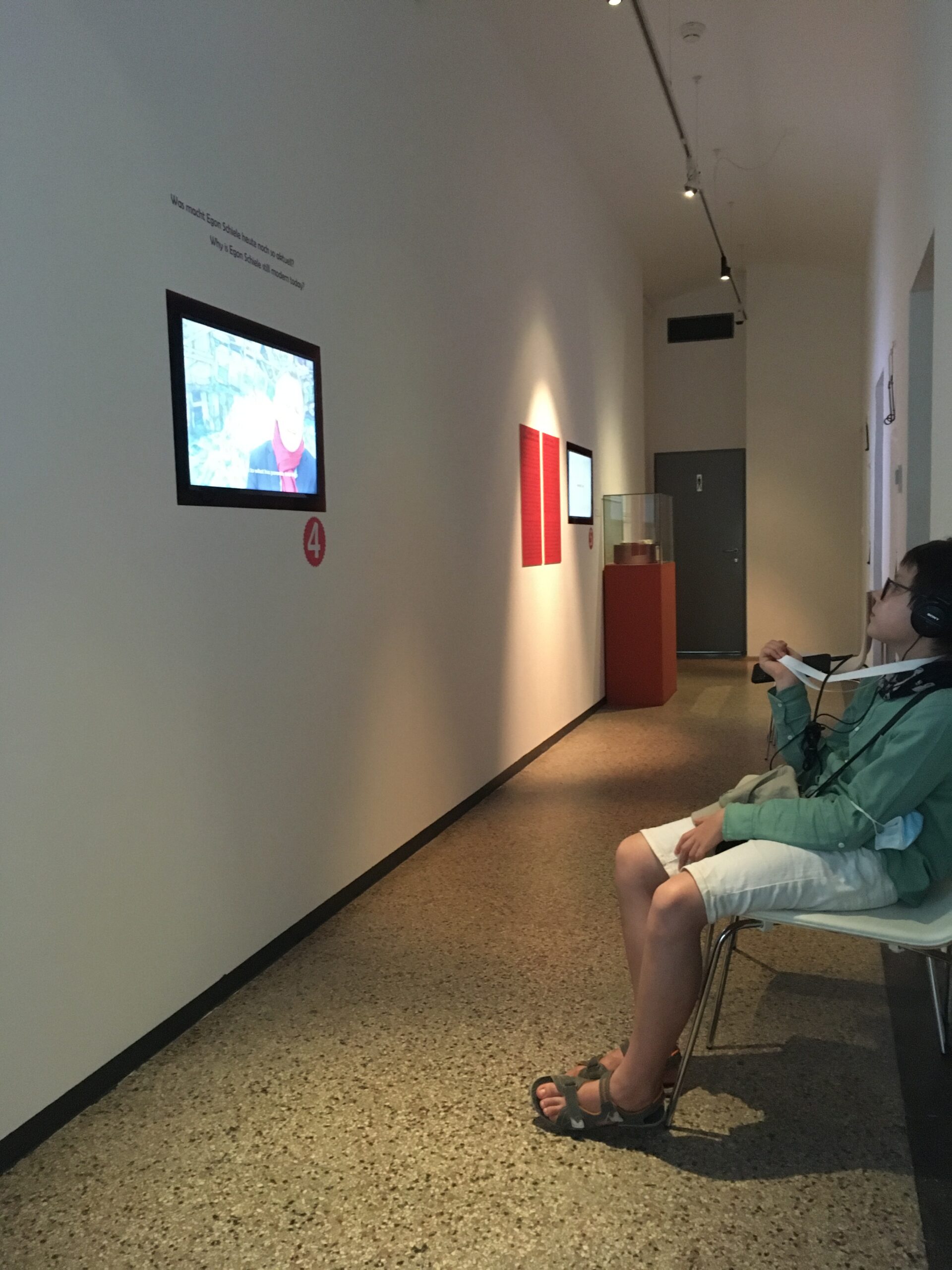
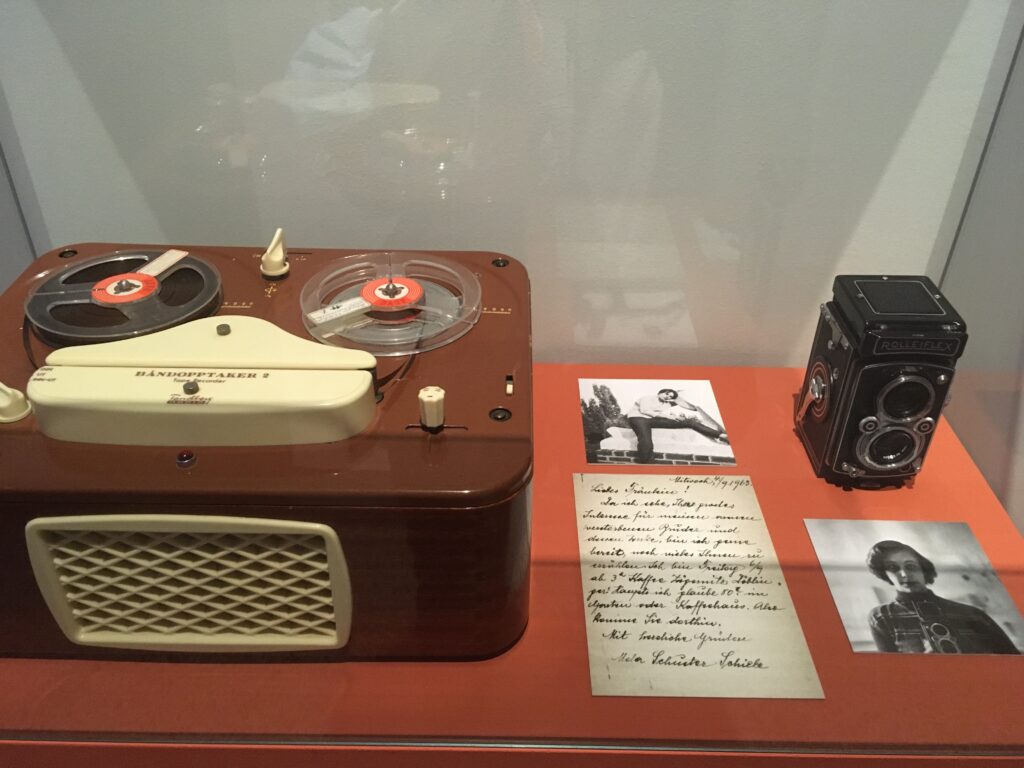
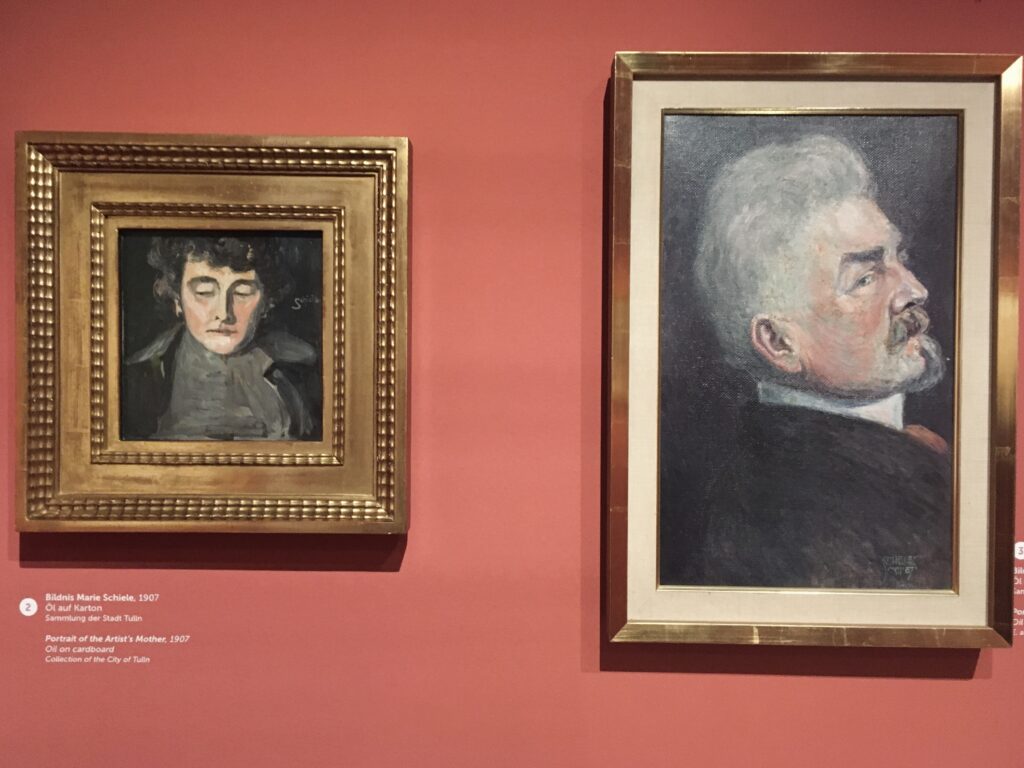
The world’s only Egon Schiele museum is housed in a former prison building. There is nothing here that directly hints at Schiele’s imprisonment; the building is simply located in the city centre and no longer serves its original purpose. You will easily find it, even though nothing in its exterior now reads as penitentiary — a large-scale portrait of the artist is painted across the façade. The exhibition is divided into two parts. The first — the so-called “treasury” — is a gallery space for displays of Schiele’s paintings and drawings from different periods; it is renewed every year. The second part is documentary in nature and is set within the former cells. It features media installations in six chapters, tracing the key stages of Schiele’s short life. Particularly valuable are the voices of Melanie Schiele and Adele Harms, the artist’s sister and sister-in-law, who speak about him in a warm, intimate, almost homely tone. It is in Tulln, his hometown, that these interviews, recorded by Alessandra Comini in 1963 with members of his family, feel especially fitting.
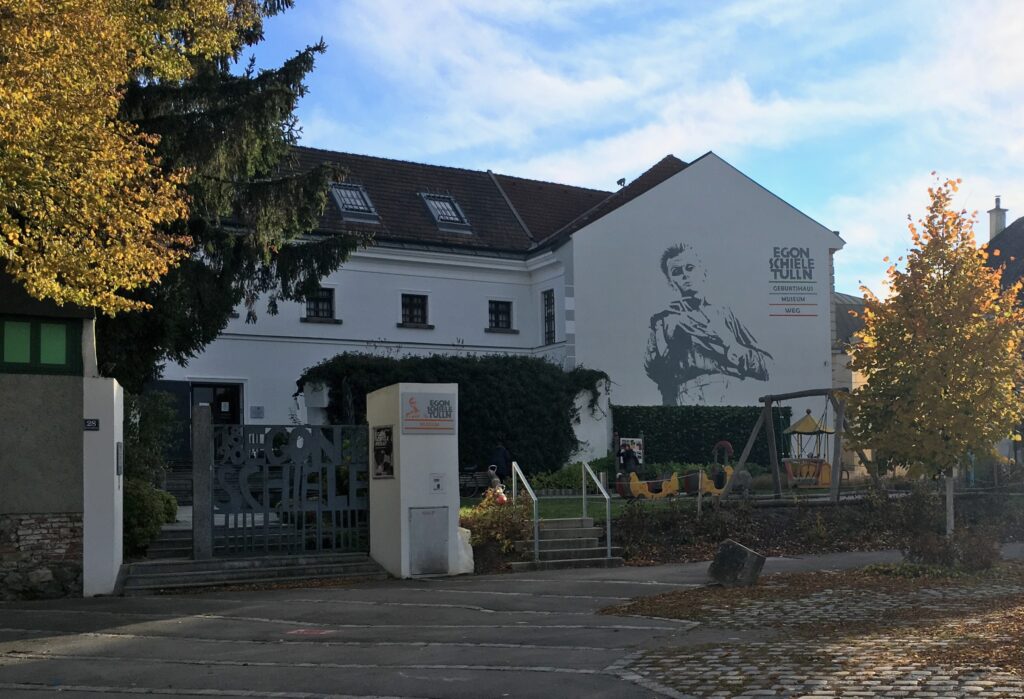
Address: Donaulände 28, 3430 Tulln an der Donau, Austria
Opening hours: From 21 March to 1 November, daily except Mondays, 10:00–17:00
Official website of the Schiele Museum: Egon Schiele Museum Tulln
The museum on: Google and Apple maps
Neulengbach
Former district court cells
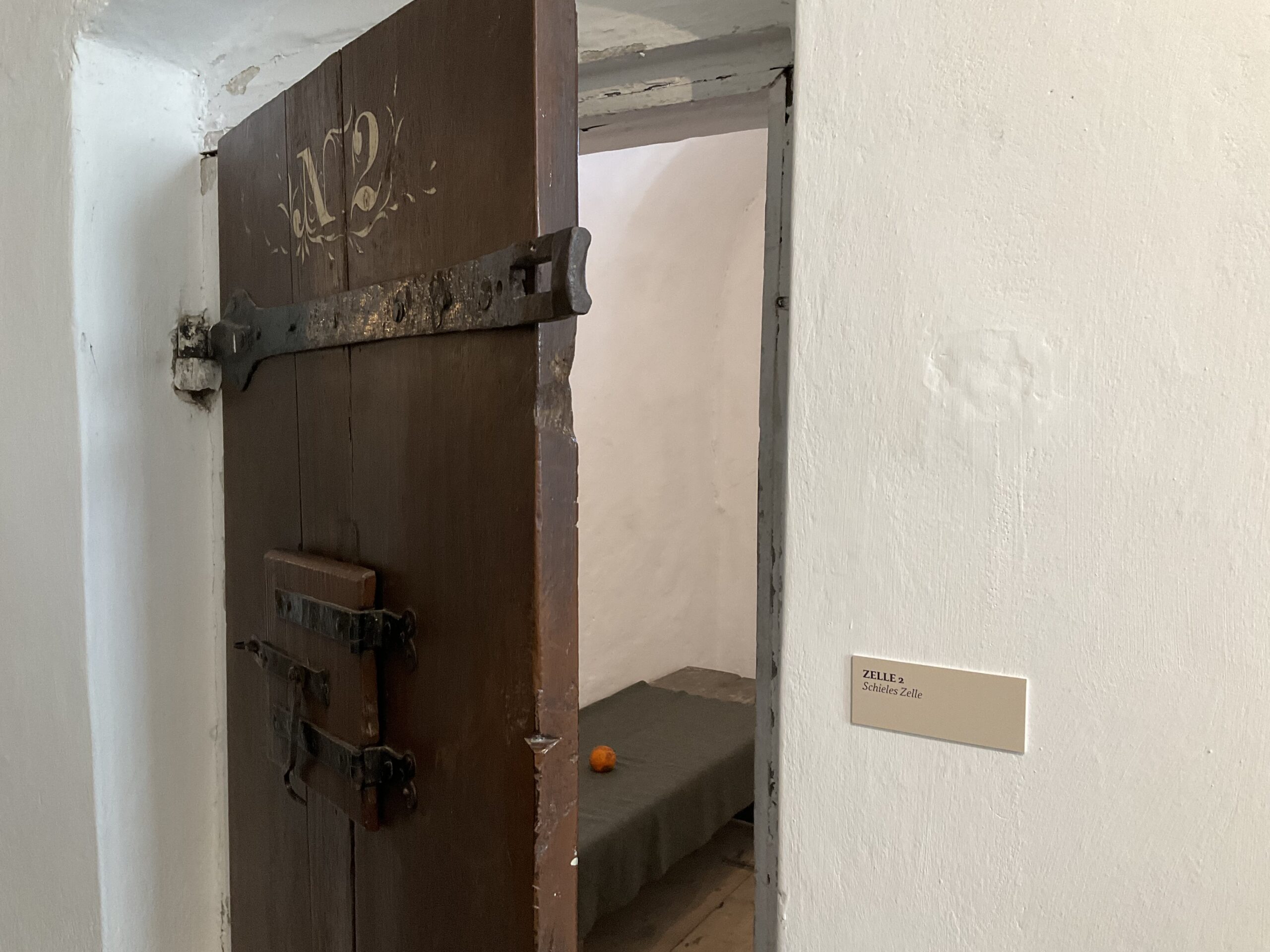
The actual place where Schiele was imprisoned is now also a museum. It was here that he spent 17 days in a tiny solitary cell while awaiting trial, which ultimately sentenced him, for “gross disturbance of public order, offensive to public morality” — namely drawings of nude minors — to a further three days in prison.
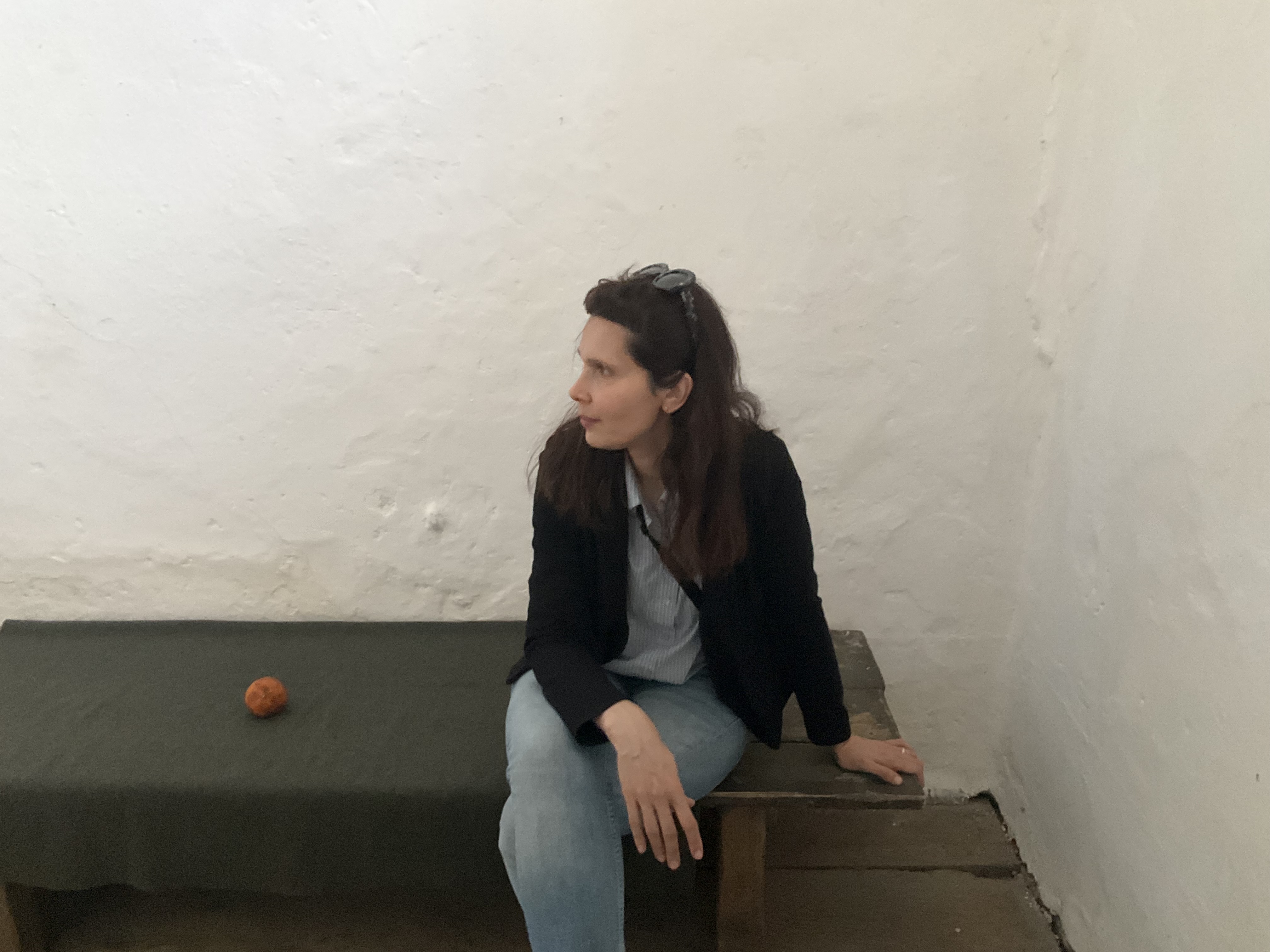
In just one minute inside the cell where Schiele spent two and a half weeks, you will come to understand him more deeply than after reading a dozen articles about him — especially if you stand inside with the door locked from the outside. The days Schiele spent here cannot simply be classed as an ordinary period of hardship. The cells are located within the complex of the municipal administration buildings and are open to the public. This sense of detachment from the world — being, in effect, at its very centre — is profoundly unsettling: life continues just beyond the walls as usual, with a kindergarten, a notary’s office, a social club, and sunlight streaming outside. But inside the cell, there is none of that. There is an orange lying there — the one brought to Egon by his friend Wally Neuzil. The drawings now held in the Albertina, those he made precisely here, cease to appear as the expressions of an egocentric artist in an exalted state. After this experience, Schiele became more cautious in his depictions of the nude.
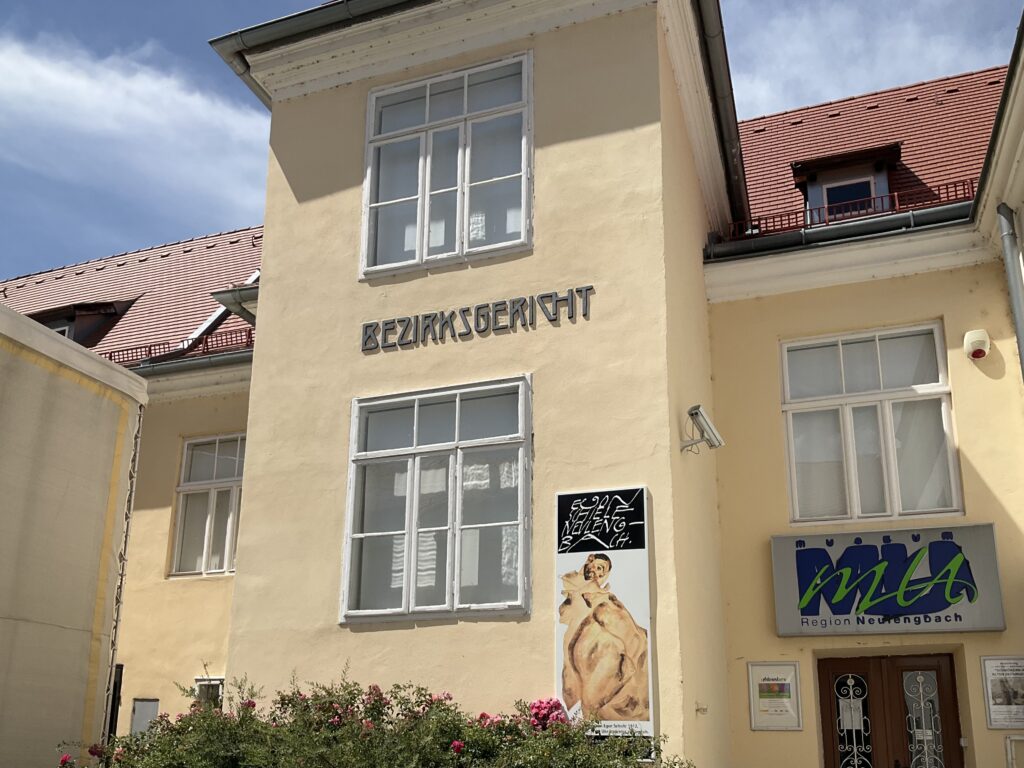
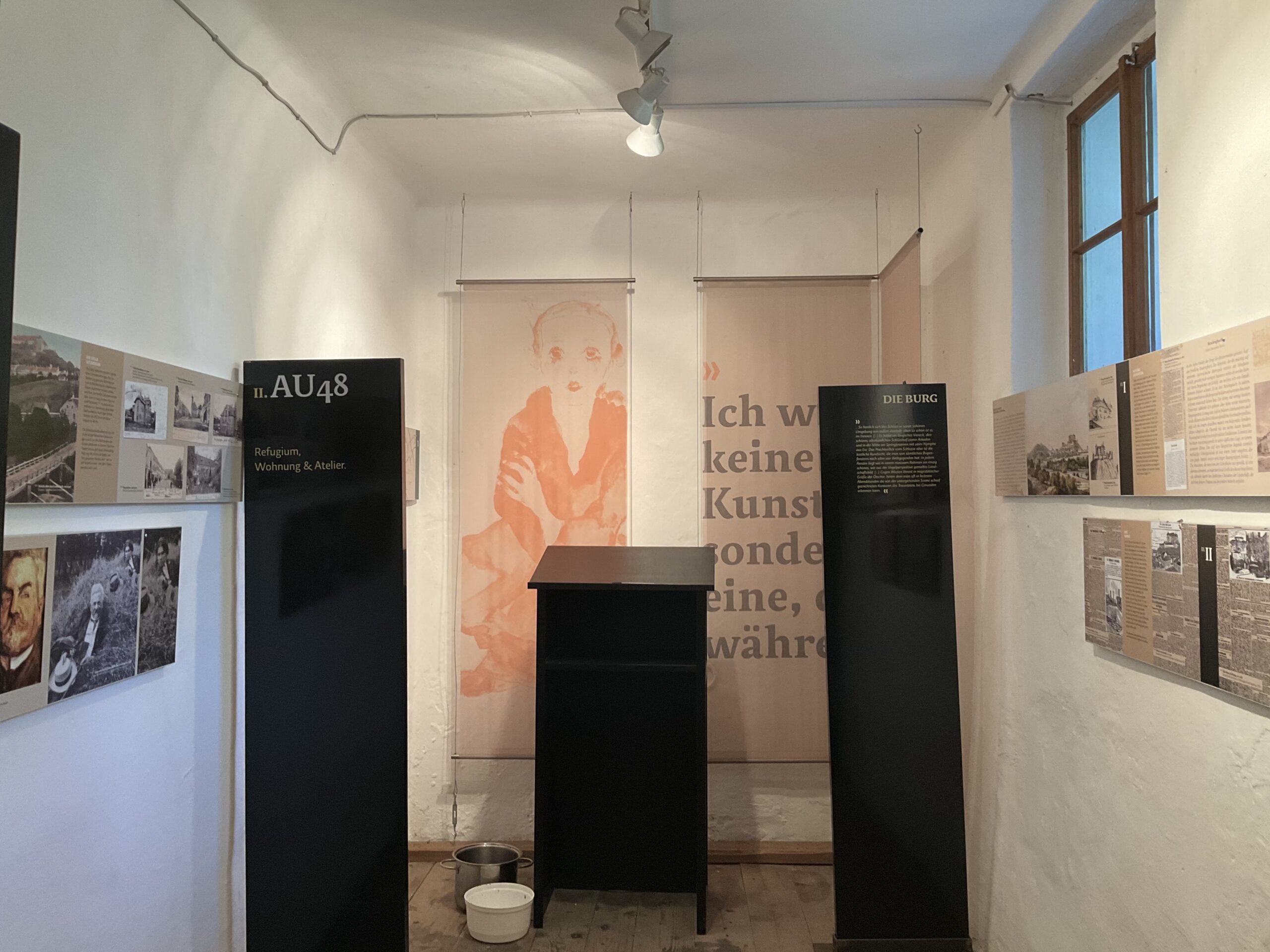
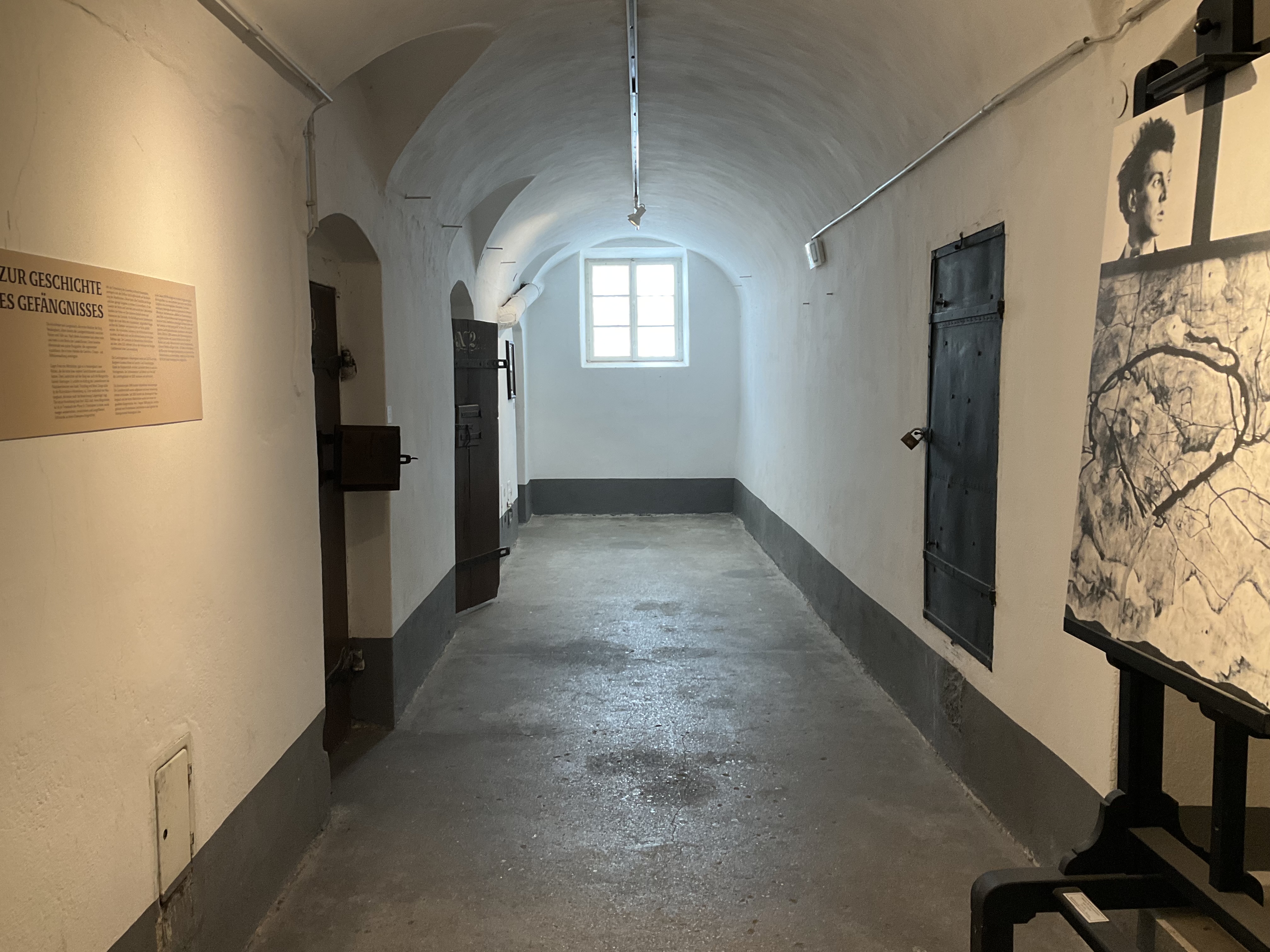
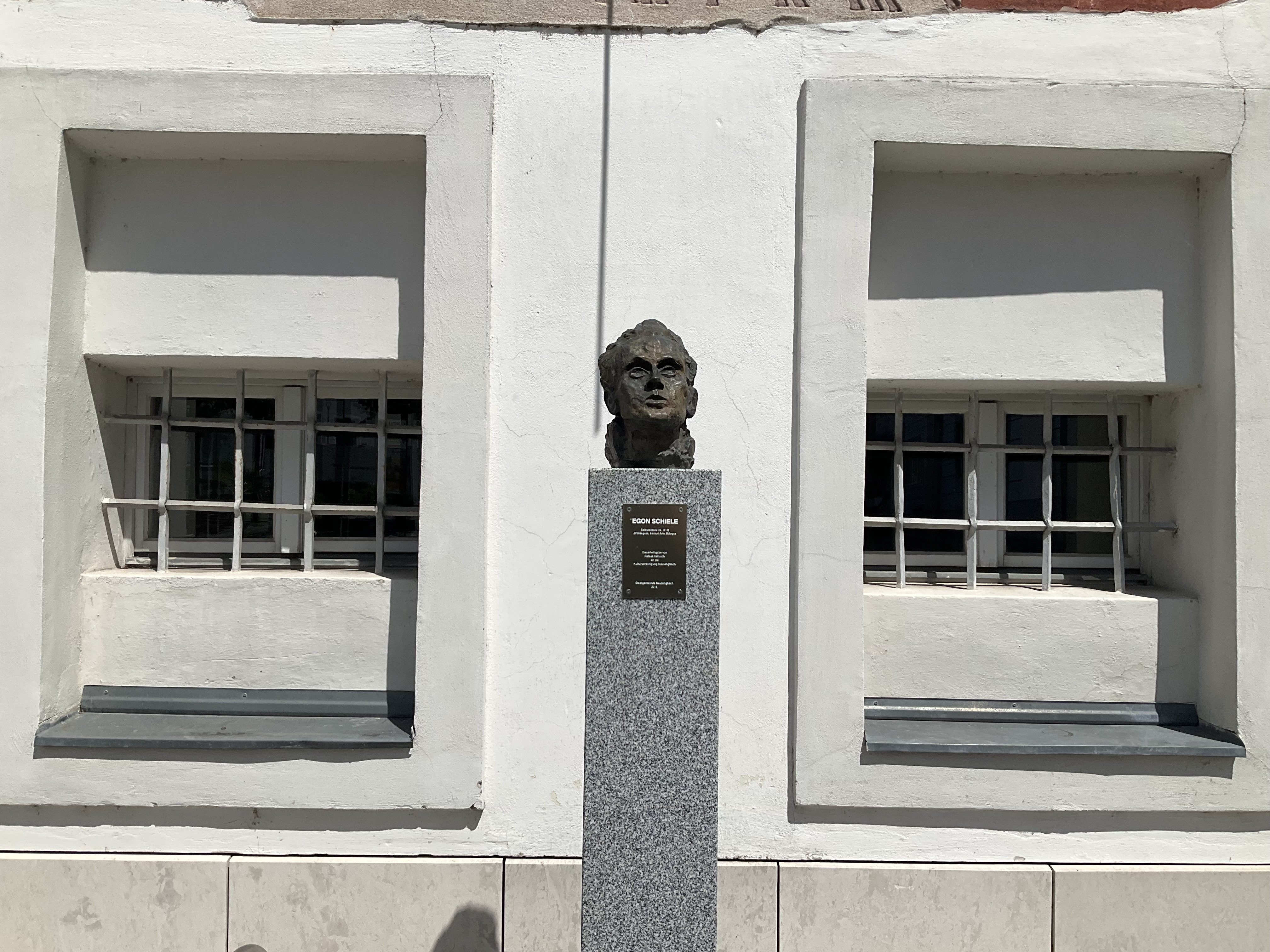
Here, as in the museum in Tulln, there are many references to Alessandra Comini, an American art historian who followed in the artist’s footsteps in 1963, at a time when interest in Schiele’s work in Austria itself was, to put it mildly, rather restrained. It was her enthusiasm that persuaded the local residents — who had long since forgotten the fifty-year-old affair — of the value of the site as a place of memory dedicated to Egon Schiele. A couple of girls from that time shared with her their recollections of the town’s biggest art scandal, and you will also find these accounts in the small museum.
Address: Hauptplatz 2, 3040 Neulengbach, Austria
Opening hours: Daily 09:00–17:00, free admission
Museum page on the official Neulengbach city website
Find the museum on Google and Apple maps